


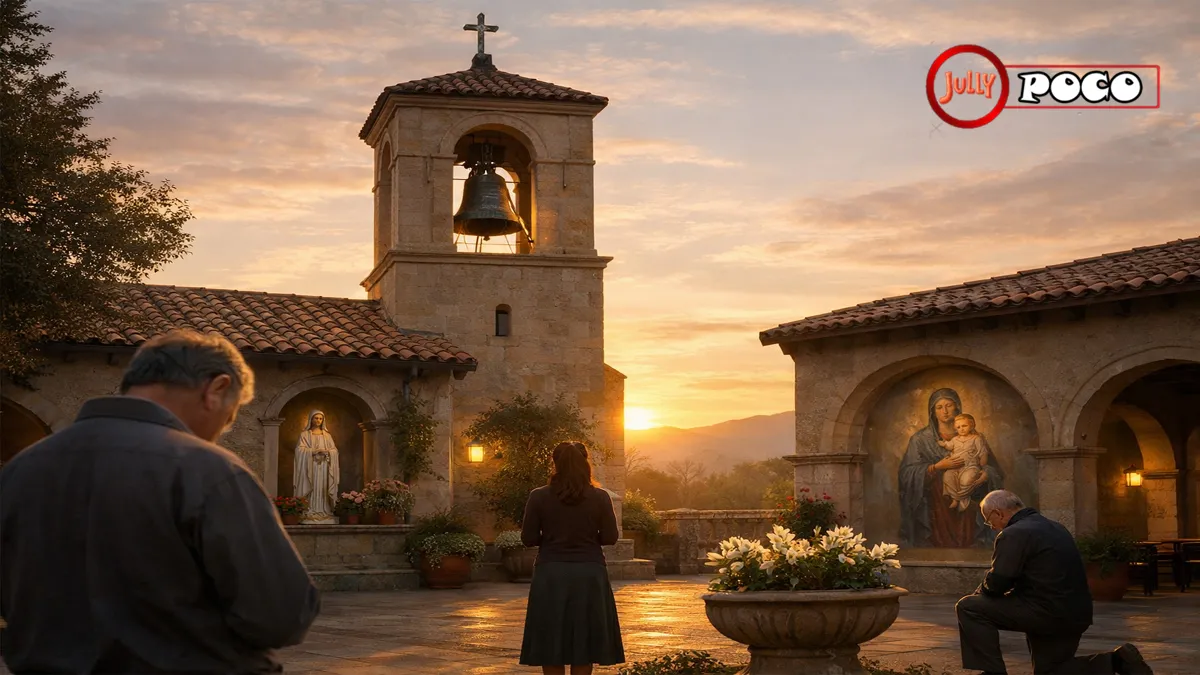
In a world filled with noise, the angelus prayer offers something rare: a sacred pause. It is simple, brief, and deeply rooted in Christian life. Yet its impact can shape an entire day. For many Catholics, this devotion is more than a habit. It is a way to remember that God entered human history, and still enters ordinary moments today. 🙏
Prayed traditionally at 6 a.m., noon, and 6 p.m., the Angelus invites believers to stop, breathe, and reflect on the mystery of the Incarnation. It recalls the Annunciation, Mary’s “yes” to God, and the truth that “the Word was made Flesh.” These words are not distant theology. They speak to daily life, daily struggle, and daily hope.
This article explores seven reasons this timeless prayer continues to inspire faith around the world. Along the way, you will see why this devotion remains relevant in homes, churches, schools, and even busy city streets where bells still ring at noon. 🔔
What Is the Angelus Prayer?
The Angelus is a traditional Catholic devotion centered on the Incarnation of Jesus Christ. It commemorates the moment the angel Gabriel announced to Mary that she would bear the Son of God.
Its structure is beautifully simple:
- Three short verses and responses
- A Hail Mary after each verse
- A concluding prayer asking God to pour grace into our hearts
The prayer focuses on three key moments:
- The angel’s message to Mary
- Mary’s acceptance of God’s will
- The Word becoming flesh and dwelling among us
In that sense, the Angelus is both a meditation and a proclamation. It teaches doctrine while forming the heart.
Quick Reference: Angelus Prayer at a Glance
| Aspect | Details |
|---|---|
| Origin | Rooted in medieval Catholic devotion; formalized by the 16th century |
| Main Focus | Incarnation of Christ and the Annunciation to Mary |
| Traditional Times | 6 a.m., 12 noon, 6 p.m. |
| Structure | Three verses, three Hail Marys, concluding prayer |
| Core Themes | Mary’s fiat, Christ’s coming, grace, obedience |
| Spiritual Role | Daily sanctification, Marian devotion, spiritual strength |
| Modern Practice | Still widely prayed privately and communally worldwide |
1. It Centers the Heart on the Incarnation
One reason the Angelus has endured is its clear focus. It keeps believers close to the heart of Christianity: God became man.
That truth can sound familiar. Yet familiarity can dull wonder. The Angelus restores that wonder by repeating it in daily life. Morning, midday, and evening become moments to remember that Christ entered the world not as an idea, but as a person.
Why this matters daily
The Incarnation changes how believers see everything:
- Work becomes a place where grace can be present
- Suffering is no longer meaningless
- Ordinary life becomes a meeting place with God
This is one reason the angelus prayer speaks to both the scholar and the parent rushing through lunch. It makes profound theology accessible.
A nurse praying at noon in a hospital chapel is not escaping reality. She is grounding herself in it. A student whispering the prayer before evening study is not performing a ritual. He is recalling that God is near.
For Catholics seeking a reliable daily devotion, this prayer keeps faith from drifting into abstraction.
2. It Teaches the Beauty of Mary’s “Fiat”
At the center of the Angelus stands Mary’s response: “Be it done unto me according to Your word.”
That sentence is short. Its meaning is immense.
Mary’s fiat is not passive. It is courageous trust. She accepts God’s plan without seeing every detail. That makes her example deeply human and deeply relevant.
What Mary’s yes teaches modern believers
Many people live with unanswered questions:
- A family waiting for test results
- A young adult choosing a vocation
- A parent carrying hidden burdens
- A worker facing uncertainty
Mary’s response becomes a model in those moments. She shows that faith often begins before clarity arrives.
The prayer does not ask believers to imitate Mary in a vague way. It places her words directly before them, several times each day. That repetition shapes the heart over time.
In Catholic teaching, Mary’s role in salvation history is not decorative. It is essential to the mystery being remembered. Her obedience opens the door to Christ’s coming into the world.
For readers wanting a trusted Catholic explanation of Mary’s role, the Catechism of the Catholic Church provides a strong foundation.
3. It Sanctifies the Day Through a Sacred Rhythm
The traditional Angelus times are not random. They create a rhythm: morning, midday, and evening. That rhythm is one reason this devotion has remained widely practiced across centuries. ⏰
Church bells often marked these moments, especially before Vatican II, when clergy, religious, and laity commonly paused together. In many places, that custom still continues.
Why rhythm matters in spiritual life
Daily life can become scattered. The mind moves quickly from task to task. A fixed prayer time helps gather attention again.
The Angelus does this in a gentle way:
- At 6 a.m., it offers the day to God
- At 12 noon, it interrupts busyness with remembrance
- At 6 p.m., it invites gratitude and reflection
This pattern resembles the way meals nourish the body. Small pauses of prayer nourish the soul.
Consider a mother managing a household. At noon, the Angelus can become her brief return to peace. Consider an office worker stepping away from a screen for two minutes. That pause can steady the rest of the day.
The practice is short enough to be realistic. That accessibility is part of its genius.
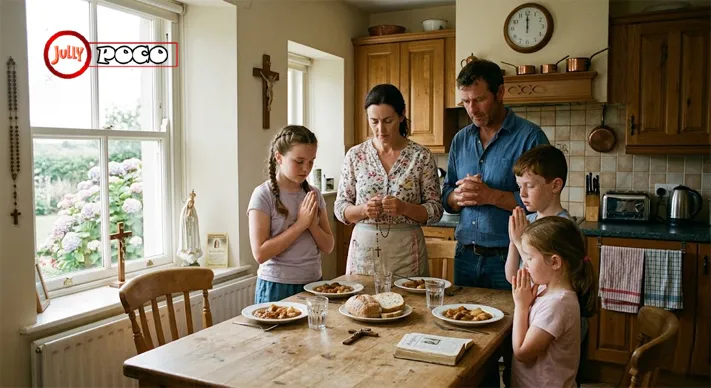
4. It Offers a Short Prayer with Deep Spiritual Strength
Many people want to pray more, but feel overwhelmed by long devotions. The Angelus meets that challenge with simplicity. It is brief enough to memorize, yet rich enough to sustain lifelong reflection.
That balance explains its global reach.
Why simplicity should never be underestimated
Some of the most lasting spiritual habits are small:
- A morning offering
- A Psalm before bed
- A quiet sign of the cross
- The midday recitation of the Angelus
The prayer does not demand special settings. It can be prayed:
- Alone in a parked car
- With coworkers in a chapel
- In a classroom
- In a parish community
- At home with children
That flexibility makes it one of the most practical Catholic devotions.
It also serves people in different seasons of life. A retiree may pray it slowly with reflection. A teenager may begin with one recitation a day. A priest may hear church bells and lead it publicly.
The point is not complexity. The point is fidelity.
For many believers, that daily fidelity becomes a quiet anchor. Over time, the words no longer feel external. They become interior habits of trust.
5. It Connects Personal Prayer with the Universal Church
The Angelus is intimate, but never isolated. It joins the individual believer to the wider Church.
That connection matters in an age when faith can feel private or fragmented. This devotion reminds people that they belong to a living tradition carried by generations before them.
A prayer heard across countries and cultures
In many Catholic countries, the Angelus bell still rings at noon. Farmers once paused in fields. Shopkeepers stopped for a moment. Students bowed their heads. Monasteries, villages, and cathedrals shared the same words.
That communal witness still has power today.
Even when prayed alone, the devotion carries a sense of belonging. A person praying in a city apartment is spiritually joined to others praying in parishes, convents, schools, and homes around the world.
This is one reason the angelus prayer remains more than a private meditation. It is a shared act of memory and faith.
The Vatican also preserves this tradition through the Pope’s Sunday Angelus address in Rome. For current examples and reflections, readers can visit the Angelus page at Vatican News.
A tradition that builds identity
Shared prayer builds spiritual identity in simple ways:
- Children learn the faith through repetition
- Families pass on Catholic memory
- Parishes create common spiritual language
- Individuals feel less alone in prayer
In this way, the Angelus helps faith move from theory into culture.
6. It Strengthens Believers in Spiritual Battle
Catholic tradition has long understood prayer as more than comfort. Prayer is also strength. Some theologians and spiritual writers recommend the Angelus as a help in resisting temptation and discouragement.
This does not mean the prayer functions like a slogan or superstition. Its strength comes from what it proclaims: Christ has entered the world, grace is real, and God works through humble obedience.
Why the prayer can support spiritual resilience
The Angelus turns attention toward truths that stabilize the soul:
- God acts in history
- Grace enters the human heart
- Mary models faithful obedience
- Christ is truly present in human life
These truths are powerful during spiritual strain.
A person facing temptation often feels mentally scattered. A person struggling with fear may feel spiritually weak. A person carrying grief may feel alone. The Angelus gathers these wounded places under the light of the Incarnation.
Fr. Chad Ripperger and other Catholic voices have noted the value of disciplined prayer in spiritual warfare. The Angelus fits naturally into that pattern because it trains the heart to return to God at fixed times.
That return matters. Temptation thrives in forgetfulness. Prayer restores memory.
Real-life example
Imagine someone dealing with recurring anxiety at work. At noon, the Angelus becomes a reset. Not everything changes at once. But the person remembers: God is with me, grace is active, and I can answer this hour with trust.
That is how small prayers become strong prayers.
7. It Keeps Faith Grounded in Ordinary Life
One of the most beautiful things about the Angelus is its realism. It does not remove believers from the world. It meets them in the middle of it.
The Annunciation happened in an ordinary human setting. Mary received God’s message not in a public triumph, but in hiddenness. That pattern continues. God still enters kitchens, offices, hospitals, farms, schools, and sidewalks.
Why this matters today
Many people divide life into two parts:
- Prayer belongs to church
- Everything else belongs to daily survival
The Angelus challenges that split. It says daily life is exactly where God wishes to be remembered.
This makes the prayer especially valuable now. People are busy, tired, and distracted. Long spiritual retreats are not possible every week. But a short pause at set hours can still shape a life.
The devotion also teaches that holiness grows through repetition. Like watering a plant, each prayer may seem small. Yet over time, the roots deepen. 🌿
The Angelus Prayer: Summary Form
Here is the common summary form of the prayer:
- The Angel of the Lord declared unto Mary.
And she conceived of the Holy Spirit.
→ Hail Mary - Behold the handmaid of the Lord.
Be it done unto me according to Your Word.
→ Hail Mary - And the Word was made Flesh.
And dwelt among us.
→ Hail Mary - Pray for us, O Holy Mother of God.
That we may be made worthy of the promises of Christ. - Let us pray:
Pour forth, we beseech You, O Lord, Your grace into our hearts…
Those lines are simple enough for daily use, yet deep enough for a lifetime of meditation.
How to Start Praying the Angelus Each Day
Beginning does not require a perfect routine. Start small and be consistent.
A simple plan
- Begin with one time each day, often noon
- Save the text on your phone
- Set a gentle alarm
- Pray slowly, not mechanically
- Add the morning and evening recitations over time
Helpful settings
You might pray the devotion:
- Before breakfast
- During a lunch break
- Before dinner
- With family after school
- Alone during a quiet walk
Consistency matters more than perfection.

Angelus Prayer and Other Catholic Devotions
The Angelus should not be seen as a replacement for the Mass or the Rosary. It complements them.
How it fits within Catholic life
- Mass remains the center of Catholic worship
- The Rosary offers extended meditation on Christ’s life
- The Angelus sanctifies the day through brief pauses
Each devotion has its place.
This is one reason the practice has lasted so long. It does not compete with the Church’s liturgical life. It supports it. It helps the truths celebrated at Mass remain present in daily routine.
For a broader explanation of Catholic prayer traditions, the United States Conference of Catholic Bishops offers trusted guidance.
Frequently Asked Questions
1. What is the main purpose of the Angelus Prayer?
Its main purpose is to honor the Incarnation of Christ and Mary’s role in salvation history. It also sanctifies the day through brief moments of prayer.
2. When is the Angelus traditionally prayed?
It is traditionally prayed at 6 a.m., 12 noon, and 6 p.m.
3. Is the Angelus only for priests or religious?
No. It is for everyone. Clergy, religious, and laypeople have prayed it for centuries.
4. Can I pray the Angelus if I miss one of the traditional times?
Yes. The traditional times are helpful, but the prayer can still be said at another suitable moment.
5. Is the Angelus a replacement for the Rosary or Mass?
No. It complements them. The Angelus is a short daily devotion, while Mass and the Rosary have different roles in Catholic life.
6. Why do some churches ring bells for the Angelus?
The bells serve as a public reminder to pause and pray. This custom remains strong in many Catholic communities.
Final Thoughts
The angelus prayer has inspired daily faith for centuries because it speaks to the deepest Christian truths in the simplest possible way. It remembers the angel’s message, Mary’s faithful yes, and the mystery of the Word made flesh. It brings theology into daily life. It makes room for grace in the middle of work, noise, and uncertainty. ✨
Its beauty lies in its balance. It is short, yet profound. Communal, yet personal. Ancient, yet timely.
If you have never made this devotion part of your routine, begin with one pause today. Noon is often the easiest place to start. Let the words settle slowly. Over time, this quiet practice can become a steady companion, helping you remember that God is not far away. He is present in the ordinary hours of your life.
References
- Vatican, Catechism of the Catholic Church
- United States Conference of Catholic Bishops, prayers and devotions


Job Title: Content Writer
Institutional Affiliation: Jullypoco Digital Properties
Specialties: Editorial Content Writing | Digital Publishing & Storytelling | On-Page SEO
Muhammad Jawad is a passionate content writer at Jullypoco, dedicated to crafting insightful, engaging, and reader-friendly articles across diverse topics. With a sharp eye for detail and a flair for storytelling, he transforms complex ideas into clear, compelling narratives that resonate with audiences. Driven by curiosity and creativity, Jawad focuses on delivering content that not only informs but also inspires. His work reflects a commitment to quality, originality, and SEO best practices—ensuring every piece adds value to readers while strengthening Jullypoco’s authority as a trusted magazine platform.
Verify Credentials & Connect:
🌐 Official Jullypoco Author Hub |
👥 Facebook Profile |
📩 Direct Email Contact