


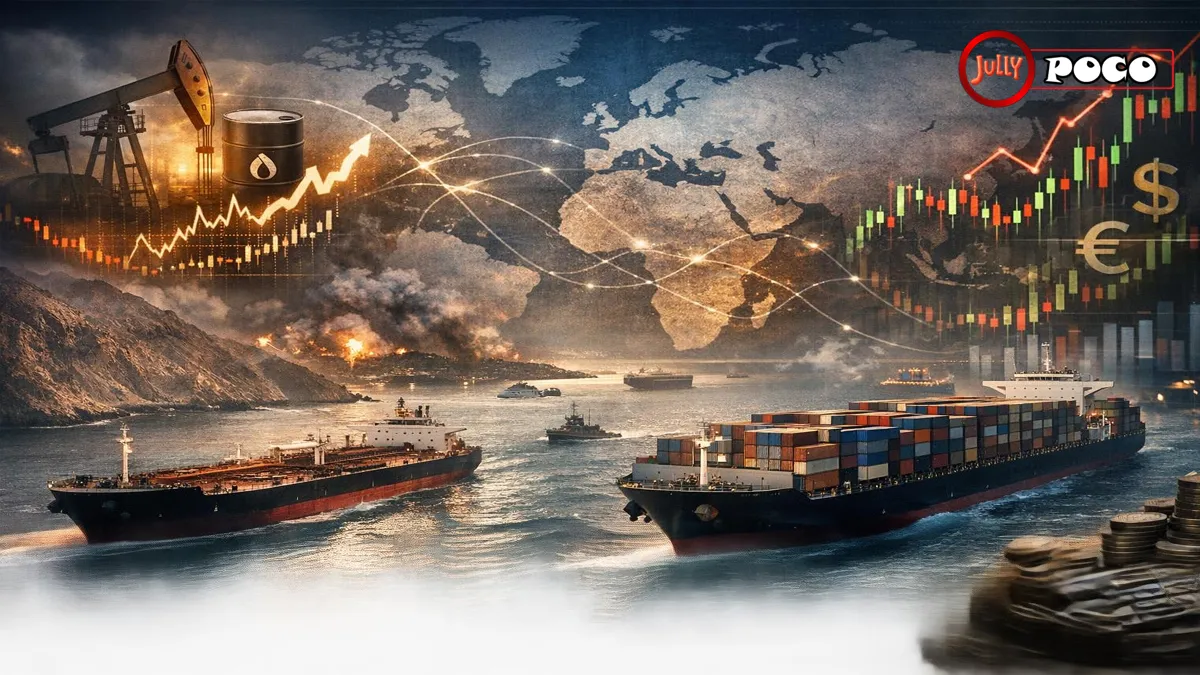
The Middle East War is not only a regional tragedy. It is also sending shockwaves through households, ports, markets, and central banks across the world. From rising fuel bills in Europe to food insecurity in low-income countries, the conflict is shaping everyday life far beyond the battlefield. 🌍
For many people, these effects feel indirect at first. A higher grocery bill. A more expensive electricity payment. A weaker local currency. Yet these small pressures are often tied to a much larger chain of events. When a conflict disrupts a major energy route, the world economy reacts like a body under stress. Oil, gas, shipping, credit, and confidence all begin to tighten at once.
This article explains, in simple terms, how the Middle East War is affecting energy, trade, and finance sectors worldwide. It also shows why poorer, import-dependent nations are carrying the heaviest burden, while some exporters gain temporary relief.
1. The Middle East War has become a global economic shock
The first and most important fact is this: the economic shock is highly uneven.
Not every country is affected in the same way. Oil importers suffer first. Low-income countries suffer more deeply. Nations with foreign exchange reserves and strong fiscal buffers can absorb the hit better. Others cannot.
This is why the conflict matters even in places far from the Middle East.
Why the shock is asymmetric
A country that imports most of its fuel has few good options when oil prices rise. It must either:
- Pay more for energy imports
- Pass costs on to consumers
- Borrow more money
- Cut spending elsewhere
By contrast, an oil exporter may receive higher revenues during the same period.
That creates a split world economy:
- Import-dependent countries face inflation, budget pressure, and slower growth
- Commodity exporters may enjoy short-term fiscal gains
- Low-income nations face the sharpest pain because food and fuel dominate household spending
This pattern is especially dangerous when the conflict lasts longer than expected. A short disruption causes a spike. A prolonged war keeps inflation alive and weakens growth over time.
2. Energy is the first and strongest transmission channel ⚡
Energy is the clearest way the conflict reaches the global economy. The Middle East remains one of the most important energy hubs in the world. When that hub is disrupted, the effects travel quickly.
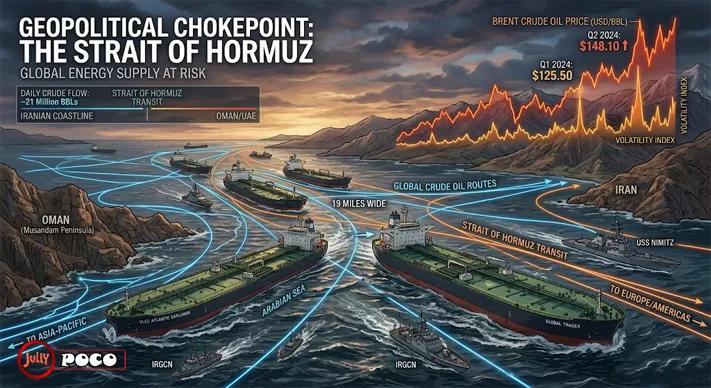
A major concern is the Strait of Hormuz. It is one of the world’s most critical maritime chokepoints. Roughly 25–30% of global oil and about 20% of liquefied natural gas (LNG) move through this narrow route.
If flows are delayed, rerouted, or threatened, traders immediately price in risk.
Why the Strait of Hormuz matters
Think of the global energy market like a city’s main bridge. If that bridge closes, traffic does not simply stop. It spills into side roads, causes delays everywhere, and raises the cost of every delivery.
That is what happens when shipping through Hormuz is disrupted.
The result includes:
- Higher crude oil prices
- Rising LNG prices
- Increased shipping insurance costs
- Delays in fuel delivery
- Greater uncertainty for investors
For updated energy market data, readers can follow the oil prices coverage from Reuters.
Short conflict versus prolonged conflict
The duration of war matters as much as the intensity.
If the disruption is brief:
- Oil prices spike quickly
- Markets react sharply
- Inflation rises temporarily
- Central banks may wait before changing policy
If the disruption continues:
- Energy stays expensive
- Businesses delay investment
- Inflation becomes harder to control
- Household consumption weakens
- Economic growth slows more broadly
This is why policymakers watch not only supply volumes, but also investor expectations.
3. Europe and Asia are especially vulnerable to higher fuel costs
Countries in Asia and Europe are among the most exposed because many rely heavily on imported oil and gas.
Factories cannot run without energy. Homes cannot be heated without gas or electricity. Transport systems cannot function without refined fuel. When prices rise, the pressure spreads across the full economy.
Europe’s uneven exposure
Europe is not affected equally.
Countries like Italy and the UK are more vulnerable because gas-fired power still plays a large role in their energy systems. When gas prices rise, electricity costs rise too.
Countries like France and Spain are relatively better positioned:
- France benefits from nuclear power
- Spain has stronger renewable energy capacity
This does not make them immune. It simply reduces the immediate shock.
Asia’s import dependence
Many Asian economies depend on imported energy to power manufacturing and transport. Higher import bills can quickly:
- Squeeze industrial profit margins
- Raise consumer prices
- Put pressure on currencies
- Increase subsidy burdens for governments
For countries already dealing with weak demand or debt pressure, this can become a serious macroeconomic risk.
4. Some exporters benefit, but not all equally
It may seem that all oil exporters win when prices rise. The reality is more complicated.
Who benefits most
Some countries in the Middle East, Africa, and Latin America may enjoy higher export revenues. These gains can improve:
- Government budgets
- Foreign currency reserves
- Trade balances
- Investor confidence
Countries such as Brazil and Ecuador may find temporary fiscal breathing space from stronger commodity earnings.
Why Gulf producers may benefit less than expected
Not every exporter can fully capitalize on higher prices. If exports are physically constrained by shipping disruption, the benefit becomes limited.
A producer may have valuable oil, but if transport routes are uncertain, insurance costs soar, or shipment volumes fall, actual earnings may not rise as much as expected.
This is especially relevant for Gulf states facing export bottlenecks.
Risk premium remains even after transit improves
Even if shipping resumes, the market does not simply forget.
A “risk premium” often stays in prices because traders and investors fear another disruption. That uncertainty can reduce long-term investment in energy projects, logistics, and industrial expansion.
In other words, recovery in transit does not always restore confidence.
5. Trade routes are under pressure, and freight costs are climbing 🚢
Energy is only part of the story. Trade itself is becoming more expensive and less predictable.
When ships avoid risky waters, they take longer routes. Longer routes mean:
- Higher fuel use
- Longer delivery times
- Increased insurance costs
- More congestion at alternative ports
That affects everything from raw materials to food ingredients.
The hidden cost of rerouting ships
Imagine a retailer waiting for goods that normally arrive in 12 days. Because of rerouting, delivery now takes 20 days and costs much more. The retailer then passes part of that cost to consumers.
That is how a maritime security crisis becomes an inflation problem.
This also hurts manufacturers that depend on just-in-time supply chains. Delays in one component can slow entire production lines.
For broader monitoring of global trade, the World Bank provides useful data and analysis.
6. Fertilizer disruption could turn into a food crisis 🌾
One of the least discussed, but most serious, consequences involves fertilizer.
About one-third of global fertilizer trade passes through the Strait of Hormuz. If flows are disrupted during planting season, farmers may face shortages or higher costs just when they need supplies most.
That can lead to:
- Lower fertilizer use
- Smaller crop yields
- Reduced food supply
- Higher food prices months later
This is how an energy conflict can become a food security emergency.
Why low-income countries are most exposed
In low-income countries, food accounts for around 36% of household consumption. Compare that with:
- 20% in emerging markets
- 9% in advanced economies
This difference matters a great deal.
If food prices rise 10%, a wealthy household may cut back on leisure spending. A poor household may skip meals, delay school payments, or sell assets.
That is why the Middle East War has consequences far beyond oil charts and trading screens.
Real-life example
A farming community in East Africa may pay more for imported fertilizer, harvest less maize, and then face higher bread prices in the same year. The damage hits both income and nutrition.
7. Other vital materials are also at risk
Oil and fertilizer dominate headlines, but they are not the only materials under pressure.
Helium shortages
The Gulf region is an important supplier of helium. Helium is used in:
- Semiconductor production
- Medical imaging equipment
- Scientific research
A supply disruption can create delays in industries that already depend on fragile global supply chains.
Sulfur and industrial processing
Sulfur shipments from the Gulf are also important for nickel processing, especially in countries like Indonesia. Nickel is essential for battery production and stainless steel manufacturing.
A shortage of sulfur may not sound dramatic at first. But it can ripple into electric vehicle supply chains and industrial output.
This is a reminder that modern trade is deeply interconnected. A disruption in one corridor can affect products that seem unrelated.
8. Inflation pressures are spreading across regions 📈
Higher energy and food prices almost always feed inflation. This conflict is no exception.
When transport, power, and basic goods become more expensive, central banks face a difficult choice. They can tighten policy to contain inflation, but tighter policy may also slow growth.
Regional inflation patterns
Here is how the inflation pressure is showing up across regions:
| Region | Main Pressure Point | Likely Effect |
|---|---|---|
| Europe | Gas and electricity costs | Higher living costs, wage pressure |
| Asia | Fuel imports and weaker currencies | Imported inflation, reduced margins |
| Latin America | Commodity volatility and exchange rates | Inflation expectations tested |
| Africa | Food and fertilizer prices | Acute household hardship |
| Middle East importers | Energy and food import bills | Budget and social stress |
Europe’s cost-of-living problem
In Europe, rising power and heating costs can revive cost-of-living stress. Workers may push for higher wages to keep up. That can create a second round of inflation pressure.
Asia and Latin America face currency risks
In parts of Asia and Latin America, inflation becomes harder to control when local currencies weaken against the dollar. Imports then cost even more.
This is especially difficult for central banks trying to balance growth and price stability.
Africa and fragile states face the sharpest social strain
Food inflation hits hardest where incomes are low and social safety nets are thin. In some African and Middle Eastern countries, even a modest rise in staple food prices can trigger serious hardship.
For global surveillance and policy insight on inflation, the IMF remains a key source of macroeconomic analysis, though readers should also watch its newer country and regional updates.
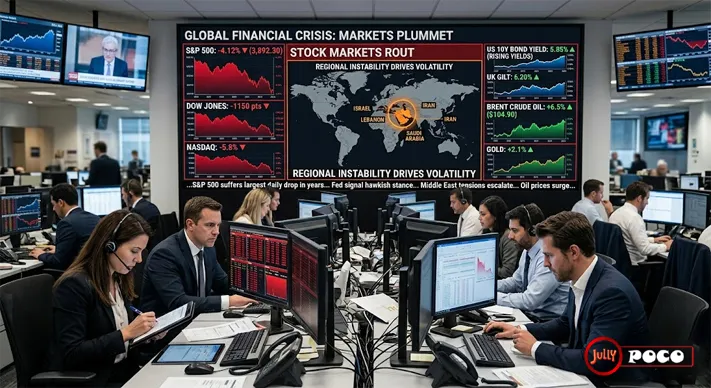
9. Financial markets are reacting with caution and fear 💰
Wars do not only move oil markets. They also unsettle financial markets.
When uncertainty rises, investors often move away from riskier assets. That can lead to:
- Stock market declines
- Rising bond yields
- Wider credit spreads
- Currency weakness in emerging markets
- Higher refinancing costs
Why bond yields and credit spreads matter
A government or company that wants to borrow must pay a higher interest rate when markets feel nervous. That is manageable for wealthy economies. It is much harder for countries already carrying heavy debt loads.
Emerging markets often face this problem first.
Debt refinancing risks in vulnerable regions
Countries in Sub-Saharan Africa and South Asia are especially exposed because many have:
- Limited reserves
- Large external financing needs
- High debt servicing burdens
- Narrow policy space
A new shock can make refinancing difficult or expensive.
That means money that could have gone to health, schools, or infrastructure may instead go to debt payments.
10. Stronger buffers give some countries breathing room
Not every country enters a crisis in the same condition. Some have stronger reserves, healthier fiscal positions, or commodity earnings that provide a cushion.
Countries such as:
- Saudi Arabia
- United Arab Emirates
- Brazil
- Ecuador
may be better positioned than fragile importers because they have stronger buffers or export-related income.
Still, buffers are not immunity. Even well-positioned countries must manage volatility, capital flows, and investment uncertainty.
Investor confidence is fragile
Businesses do not invest boldly when geopolitical risks are high. A company considering a refinery expansion, a logistics hub, or a manufacturing plant may delay the decision.
So even countries that benefit from higher prices can lose future growth if uncertainty stays elevated.
11. The IMF is preparing to support the most vulnerable countries 🏦
As the economic pressure spreads, international institutions are becoming more important.
The International Monetary Fund is expected to play a central role through:
- Policy advice
- Emergency financing
- Balance-of-payments support
- Macroeconomic guidance for vulnerable countries
IMF Managing Director Kristalina Georgieva summed up the moment clearly:
“In an uncertain world, more countries are needing more of our support. We are there for them.”
This message matters because many low-income countries do not have enough reserves to absorb repeated shocks.
Why IMF support matters now
The countries most exposed to this crisis often face three problems at once:
- High import bills
- Weak public finances
- Rising debt stress
That combination can quickly turn an economic shock into a humanitarian one.
The IMF’s upcoming flagship reports are expected to provide deeper guidance:
- World Economic Outlook — April 14
- Global Financial Stability Report — April 14
- Fiscal Monitor — April 15
These reports will likely shape how governments, banks, and investors assess the wider fallout.
12. What this means for households, businesses, and policymakers
Big geopolitical events can feel distant. But their economic effects are deeply personal.
For households
Families may notice:
- Higher fuel bills
- More expensive groceries
- Costlier transport
- Slower wage growth in real terms
For businesses
Companies may face:
- Higher input costs
- Shipping delays
- Reduced consumer demand
- More expensive financing
For policymakers
Governments must decide how to respond without making matters worse. Common tools include:
- Temporary targeted subsidies
- Support for vulnerable households
- Strategic reserve management
- Careful monetary tightening
- Debt management planning
Blanket subsidies may bring short relief, but they are often costly. Targeted support is usually more sustainable.
13. Key facts to remember about the Middle East War
To make the picture simple, here are the most important takeaways:
- The Middle East War is disrupting oil, gas, fertilizer, and shipping routes.
- The Strait of Hormuz is a crucial chokepoint for global energy flows.
- Import-dependent and low-income countries face the greatest damage.
- Exporters may gain from high prices, but only if they can ship reliably.
- Food insecurity may worsen because fertilizer trade is at risk.
- Inflation is becoming harder to tame across many regions.
- Financial conditions are tightening, especially in emerging markets.
- Countries with stronger reserves and fiscal buffers are better protected.
- Uncertainty is curbing investment, even where revenues rise.
- International support, especially from the IMF, may become essential.
FAQs
1. Why is the Middle East war affecting countries far away?
Because the region is central to oil, gas, and shipping routes. Disruptions raise prices worldwide.
2. Which countries are most vulnerable?
Import-dependent and low-income countries are most vulnerable. They spend a larger share on food and fuel.
3. Does every oil exporter benefit from the conflict?
No. Exporters benefit only if they can maintain shipments and manage risk. Some face transport constraints.
4. Why are food prices linked to the conflict?
Fertilizer shipments are at risk, and higher energy costs also raise farming and transport expenses.
5. How does the conflict affect financial markets?
It increases volatility, pushes up borrowing costs, weakens risk appetite, and strains emerging market debt.
6. What role can the IMF play?
The IMF can provide financing, policy advice, and crisis support to countries under severe economic stress.
Conclusion
The Middle East War is reshaping the global economy through three main channels: energy, trade, and finance. Oil and gas disruptions are lifting prices. Trade rerouting is raising freight and insurance costs. Financial markets are becoming more cautious, especially toward vulnerable economies.
The burden is not shared equally. Poorer and import-dependent countries are facing the hardest choices. They must cope with inflation, food insecurity, and debt pressure at the same time. Meanwhile, some exporters may gain in the short term, though uncertainty continues to hold back investment.
For policymakers, this is a moment for calm judgment and targeted support. For businesses, it is a time to strengthen resilience. For readers and households, it is a reminder that global conflicts often arrive quietly, through bills, prices, and daily decisions.
The Middle East War may begin in one region, but its economic story reaches the whole world. Staying informed is not just useful. It is necessary. 📊
References
- Reuters – Commodities and energy market coverage: https://www.reuters.com/markets/commodities/
- World Bank – Trade overview and analysis: https://www.worldbank.org/en/topic/trade
- International Monetary Fund – IMF research and country policy support: https://www.imf.org/