


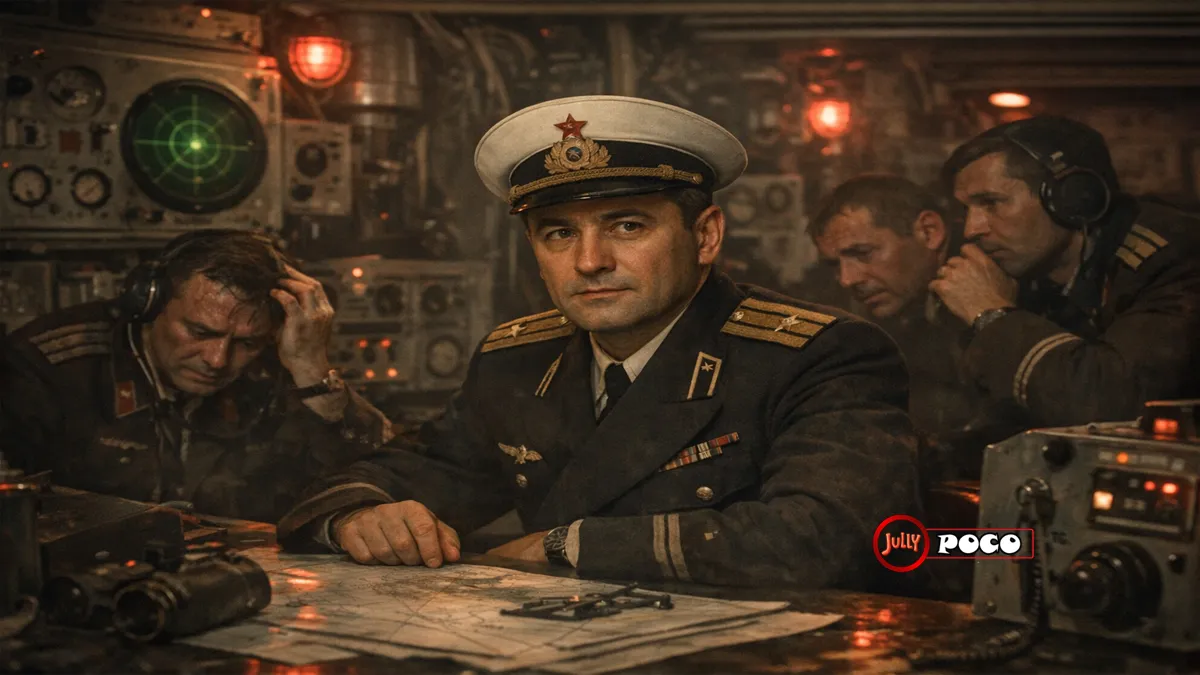
History often turns on loud speeches, famous battles, and visible leaders. Yet sometimes, the future depends on one calm voice in a sealed room beneath the sea. The story of Vasily Arkhipov Cuban Missile Crisis is one of those rare moments. It shows how a single act of restraint may have saved millions of lives. 🌍
In October 1962, the world stood on the edge of nuclear disaster. The United States and the Soviet Union faced each other during the Cuban Missile Crisis. Fear, confusion, and military pressure pushed both sides toward catastrophe. Deep underwater, aboard the Soviet submarine B-59, one decision changed everything. Vasily Arkhipov refused to approve the launch of a nuclear torpedo. That refusal is why many now call him the man who saved the world.
This article explores what happened, why it mattered, and why Arkhipov’s courage still speaks to our time. His story is not only about war. It is also about judgment, composure, and humanity under unbearable pressure.
1. Who Was Vasily Arkhipov?
Vasily Aleksandrovich Arkhipov was a Soviet naval officer born on 30 January 1925 in Moscow Oblast, USSR. He served in the Soviet Navy for decades and later rose to the rank of Vice Admiral.
At first glance, his career may seem similar to that of many Cold War officers. Yet his most important legacy came from one moment of refusal.
Key facts about Arkhipov
| Aspect | Details |
|---|---|
| Full Name | Vasily Aleksandrovich Arkhipov |
| Born | 30 January 1925, Moscow Oblast, USSR |
| Died | 19 August 1998, Moscow Oblast, Russia |
| Rank | Vice Admiral, Soviet Navy |
| Service Years | 1945–1988 |
| Critical Event | Cuban Missile Crisis, 27 October 1962 |
| Submarine | B-59, armed with nuclear torpedo |
| Decision | Refused to authorize nuclear launch |
| Impact | Prevented nuclear war between U.S. and USSR |
| Recognition | Future of Life Award, 2017 (posthumous) |
Arkhipov had already earned respect before the Cuban Missile Crisis. He had served during dangerous naval operations and developed a reputation for steadiness. That reputation mattered in 1962, when fear and uncertainty threatened to overpower reason.
2. Why the Cuban Missile Crisis Brought the World So Close to War
To understand the Vasily Arkhipov Cuban Missile Crisis story, we need to understand the larger crisis around him.
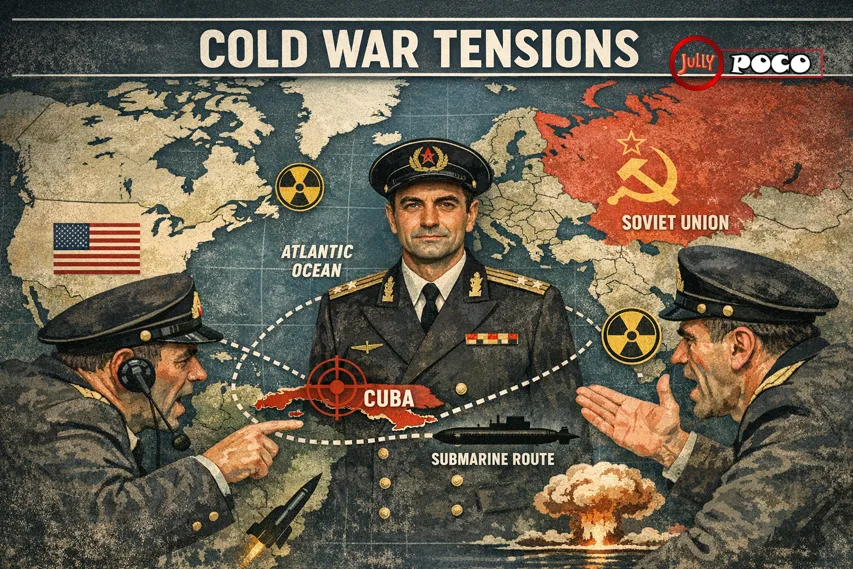
In October 1962, American surveillance discovered Soviet nuclear missiles in Cuba. For the United States, this was a direct strategic threat. Cuba sat close to the American mainland. President John F. Kennedy responded with a naval blockade, described as a “quarantine,” to stop further Soviet military shipments.
This created an extremely dangerous standoff.
Both superpowers had nuclear weapons. Both feared appearing weak. Both struggled with incomplete information. In such conditions, even a misunderstanding could trigger disaster.
Why tensions were so severe
- The U.S. saw Soviet missiles in Cuba as unacceptable.
- The Soviet Union viewed U.S. actions as aggressive pressure.
- Military units on both sides were placed on high alert.
- Communication was slow and often unclear.
- Commanders in the field faced intense uncertainty.
This was not a crisis of abstract policy alone. It was a crisis shaped by human beings making decisions in real time.
For background on the broader crisis, the Cuban Missile Crisis remains one of the most studied events in modern history.
3. The Soviet Submarine B-59 and the Nuclear Torpedo Incident
One of the most dangerous parts of the crisis happened far from cameras and public speeches. It unfolded aboard Soviet submarine B-59, a diesel-electric submarine operating near Cuba.
B-59 was not an ordinary vessel. It carried a nuclear torpedo.
That detail changes everything.
The submarine was part of a Soviet flotilla sent into the Atlantic during the confrontation. American forces detected these submarines and tried to force them to surface. U.S. Navy ships dropped signaling depth charges. These were intended as warning measures, not lethal attacks. But the crew inside B-59 could not know that for certain.
Inside the submarine, conditions became unbearable.
Conditions aboard B-59
- Temperatures rose sharply.
- Oxygen levels dropped.
- Communication with Moscow was lost.
- The crew was exhausted and under severe stress.
- The officers did not know whether war had already begun.
These details are central to the nuclear torpedo incident. This was not a calm conference room debate. It was a moment of extreme psychological and physical strain. 🫥
When people imagine nuclear history, they often think of missiles in silos or bombers in the sky. Yet one of the most dangerous nuclear decisions happened in a submarine filled with heat, fear, and silence.
4. The Decision That Required Three Officers
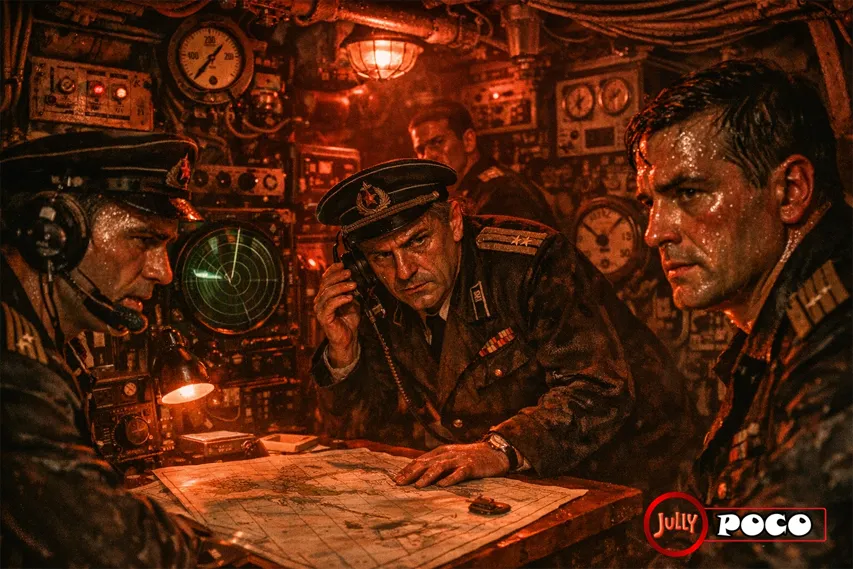
The most important detail in this story is procedural. On B-59, the launch of the nuclear torpedo required the agreement of three senior officers.
Those officers were:
- Captain Valentin Savitsky
- Political Officer Ivan Maslennikov
- Vasily Arkhipov
This requirement became one of the most important safeguards in history.
Why consent mattered
Captain Savitsky believed the submarine might already be under attack. With no communication from Moscow, he feared that war had started. In that atmosphere, launching the torpedo could seem like a final defensive act.
Maslennikov supported the captain.
Arkhipov did not.
His refusal prevented the launch.
This may sound simple in hindsight. It was not simple at all. Arkhipov was not choosing calm in a peaceful setting. He was disagreeing with two senior men under conditions of extreme pressure, possible combat, and national crisis.
That kind of courage is easy to praise later. It is much harder to practice in the moment.
5. Why Captain Savitsky Wanted to Launch
To judge this moment fairly, we must understand Captain Savitsky’s perspective.
From his position, several facts suggested the worst:
- U.S. ships were dropping explosive charges nearby.
- The submarine had lost contact with Moscow.
- The crew was physically distressed.
- The Cold War crisis had already reached a boiling point.
Savitsky reportedly believed they might be witnessing the start of war. If so, a nuclear torpedo might seem like the only remaining response.
This is why Arkhipov’s role was so critical. He helped interrupt a chain of fear-driven logic. He inserted doubt where certainty could have destroyed the world.
In many crises, danger comes from anger. In this case, danger came from confusion, exhaustion, and isolation.
6. Why Vasily Arkhipov Refused
The exact inner thoughts of Arkhipov can never be fully known. Yet historians point to several likely reasons for his refusal.
1. He understood the stakes
Arkhipov knew a nuclear launch would not remain isolated. A strike against U.S. forces would likely trigger massive retaliation.
2. He resisted panic
Others believed war may have begun. Arkhipov appears to have resisted acting on assumption alone.
3. He had credibility
Arkhipov was not a passive observer. He was respected, experienced, and able to challenge the rush toward escalation.
4. He chose verification over impulse
His stance reflected disciplined military judgment. He wanted greater certainty before taking irreversible action.
That single refusal likely prevented World War III.
This is why his story continues to resonate. He reminds us that strength is not always loud. Sometimes strength is the ability to stop others from making a fatal mistake.
7. The Man Who Saved the World
The phrase man who saved the world is often associated with Vasily Arkhipov, and for good reason.
If B-59 had launched its nuclear torpedo, the consequences could have been devastating. The U.S. Navy would have suffered a nuclear strike. American leaders, already under enormous strain, might have interpreted the attack as the beginning of broader Soviet nuclear action.
Retaliation would have been likely. Escalation could have become unstoppable.
A realistic chain of escalation
- B-59 launches a nuclear torpedo.
- U.S. naval forces are hit.
- U.S. commanders report a nuclear attack.
- Washington responds militarily.
- Soviet forces answer in kind.
- The crisis turns into large-scale nuclear war.
That is why Arkhipov is remembered not simply as a disciplined officer, but as a man whose restraint changed world history.
For a detailed biography, Vasily Arkhipov is widely recognized as the Soviet officer who helped avert nuclear catastrophe.
8. What Made the Nuclear Torpedo Incident So Unique
Many Cold War near-misses involved radar mistakes, misunderstood data, or delayed communication. The nuclear torpedo incident aboard B-59 was different because it involved direct human authorization under battlefield-like conditions.
This was not just a machine error. It was a human decision point.
Unique features of the incident
- The weapon was nuclear and ready for use.
- Senior officers believed conflict may have begun.
- Conditions inside the submarine were physically extreme.
- Communication with command was absent.
- Consent rules created one final barrier.
That last point deserves emphasis. Systems matter. Procedures matter. But individuals matter too. Rules can slow disaster, yet someone still has to choose wisely within those rules.
Arkhipov did exactly that.
9. A Short Real-Life Lesson from Arkhipov’s Decision
History becomes more meaningful when it connects to ordinary life.
Most people will never face a nuclear command decision. But many people do face moments where pressure pushes them toward the wrong choice.
For example:
- A manager receives alarming news and wants to react immediately.
- A parent hears something upsetting and assumes the worst.
- A leader feels forced to make a fast decision without enough facts.
Arkhipov’s example offers a practical lesson: pause before acting when the cost of error is enormous.
In daily life, that might prevent broken trust. In 1962, it may have saved civilization.
10. Why Arkhipov’s Story Stayed Lesser Known for Years
Despite the importance of the event, Arkhipov did not become globally famous right away. Several reasons explain this.
Soviet secrecy
The Soviet Union did not openly discuss sensitive military incidents, especially those involving nuclear risks.
Cold War information barriers
Many details about submarine operations remained classified for years.
Public focus on top leaders
Most historical attention centered on Kennedy, Khrushchev, and official diplomacy.
Quiet heroism is easy to miss
Arkhipov’s act was not dramatic in appearance. He did not deliver a public speech. He simply said no at the right moment.
This quiet quality makes his story even more powerful. Some of history’s greatest acts are invisible at the time they happen. 🕊️
11. Did Arkhipov Act Alone?
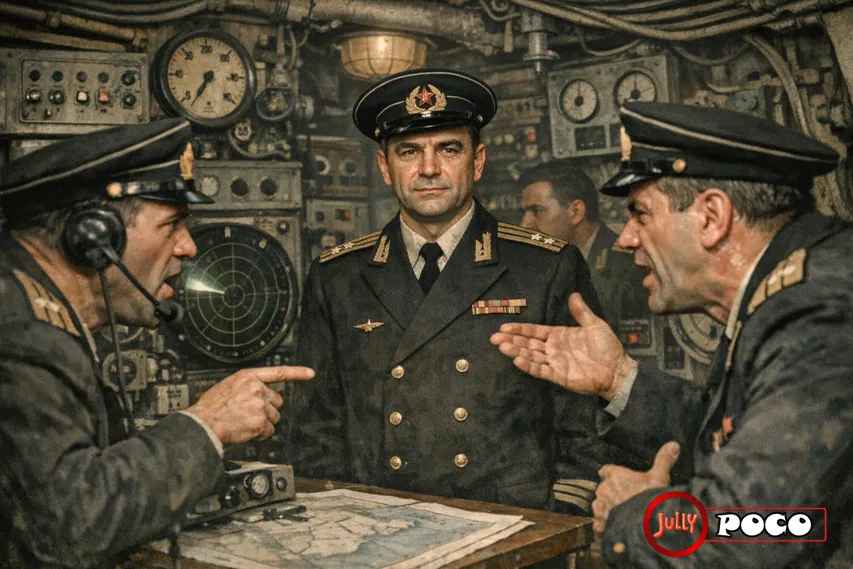
Arkhipov’s decision was central, but history is rarely the work of one person alone. The structure aboard B-59 required collective consent. That rule gave Arkhipov the power to block the launch.
Still, his personal judgment was decisive.
Without him, the other two officers appear ready to proceed. That means his presence on the submarine was not incidental. It was critical.
This balance matters:
- Systems created the opportunity for restraint.
- Arkhipov used that opportunity with courage.
In modern crisis management, this remains a vital lesson. Good systems should not rely on luck alone. But wise individuals are still essential.
12. The Human Side of the Story
It is easy to reduce Arkhipov to a symbol. Yet he was a human being under impossible strain.
Imagine the scene:
- You are deep underwater.
- It is hot and hard to breathe.
- Explosions are sounding nearby.
- You cannot contact your command.
- Two fellow senior officers believe war may have started.
Now imagine being the person who says, “Wait.”
That word may sound small. In reality, it required discipline, emotional control, and moral seriousness.
This is one reason the Vasily Arkhipov Cuban Missile Crisis story still moves readers today. It does not depend on superhuman fantasy. It depends on an ordinary person making an extraordinary decision.
13. What Happened After the Crisis?
The immediate result of Arkhipov’s refusal was simple but profound: B-59 did not launch its nuclear torpedo.
The submarine eventually surfaced. The larger Cuban Missile Crisis also began to de-escalate through diplomatic negotiation. The Soviet Union agreed to remove missiles from Cuba. The United States made concessions as well, including the secret later removal of missiles from Turkey.
The world stepped back from the edge.
Arkhipov continued his naval career and later became a Vice Admiral in the Soviet Navy. He served for many more years before his retirement.
Later recognition
Although not widely known during his lifetime, Arkhipov later received growing international recognition. In 2017, he was posthumously awarded the Future of Life Award.
This recognition reflected a wider truth: some of the most important protectors of humanity never sought attention.
14. Why Historians See This as a Turning Point
Historians study many moments when nuclear war almost happened. Yet the B-59 episode stands out because the launch decision came frighteningly close to execution.
This was not theoretical risk alone. It involved:
- A nuclear weapon ready for use
- Severe confusion
- Direct military confrontation
- Command uncertainty
- A split decision among officers
Because of these factors, many scholars and commentators say Arkhipov truly prevented World War III.
That statement is dramatic, but not exaggerated. A nuclear strike during the Cuban Missile Crisis could have unleashed consequences beyond anyone’s control.
15. Leadership Lessons from Vasily Arkhipov
Arkhipov’s story offers practical leadership lessons for today. These lessons matter in government, business, education, healthcare, and family life.
1. Calm is a form of courage
People often think courage means bold action. Sometimes courage means refusing rash action.
2. Pressure distorts judgment
Stress can create false certainty. Good leaders know this and slow down when stakes are high.
3. Dissent can save lives
Healthy systems allow someone to disagree before irreversible decisions are made.
4. Character matters before crisis begins
Arkhipov’s conduct in 1962 reflected habits built over years, not one sudden burst of wisdom.
5. Restraint is not weakness
His refusal did not show fear. It showed strength under pressure.
These lessons explain why the man who saved the world still matters beyond military history.
16. Why This Story Feels So Relevant Today
The Cold War may be over, but the risks of miscalculation remain. Nations still possess nuclear weapons. Military tensions still rise quickly. Technology moves faster than human judgment. Information can still be incomplete or misleading.
Arkhipov’s story reminds us of a timeless truth: civilization depends not only on weapons and policies, but on wise decision-makers.
Modern relevance
- Nuclear deterrence still shapes global security.
- Miscommunication remains a major risk in conflict.
- Leaders still face pressure to respond instantly.
- Public memory often overlooks the value of restraint.
This is why stories like Arkhipov’s should be taught widely. They build appreciation for patience, verification, and human responsibility.
17. Key Facts at a Glance
If you want a quick summary, here are the most important points.
Fast overview
- Vasily Arkhipov was a Soviet naval officer.
- He served aboard Soviet submarine B-59 during the Cuban Missile Crisis.
- B-59 carried a nuclear torpedo.
- U.S. naval forces dropped depth charges to force the submarine to surface.
- The crew had no communication with Moscow.
- Captain Savitsky believed war may have started.
- Launch approval required three senior officers.
- Two supported launching the torpedo.
- Arkhipov refused consent.
- His decision likely stopped nuclear escalation and prevented World War III.
18. Frequently Asked Questions
1. Who was Vasily Arkhipov?
Vasily Arkhipov was a Soviet naval officer who later became a Vice Admiral. He is best known for blocking a nuclear torpedo launch during the Cuban Missile Crisis.
2. Why is he called the man who saved the world?
He is called the man who saved the world because his refusal to approve a nuclear launch likely prevented a wider nuclear war.
3. What was the Soviet submarine B-59?
B-59 was a Soviet submarine operating near Cuba in October 1962. It was armed with a nuclear torpedo.
4. What happened in the nuclear torpedo incident?
During a tense confrontation, officers aboard B-59 considered launching a nuclear torpedo. Arkhipov refused to consent, which stopped the launch.
5. Did Vasily Arkhipov really prevent World War III?
Many historians and commentators believe he likely did. A nuclear attack during the Cuban Missile Crisis could have triggered massive retaliation.
6. Was Arkhipov recognized during his lifetime?
He was respected in the Soviet Navy, but broad international recognition came later. He received major posthumous recognition in 2017.
19. Final Thoughts on Vasily Arkhipov’s Legacy
The story of Vasily Arkhipov Cuban Missile Crisis is one of the clearest examples of moral courage in modern history. At a time of fear, confusion, and military tension, he refused to make the worst possible choice. That act of restraint likely saved countless lives.
His example matters because it is deeply human. He did not control the whole crisis. He did not command global diplomacy. He simply stood firm when a catastrophic mistake seemed possible. That is why he remains remembered as the man who saved the world.
If this story moved you, consider sharing it with others, students, or colleagues. History should remember not only those who wage power, but also those who choose wisdom. The Vasily Arkhipov Cuban Missile Crisis story deserves that place in our collective memory.