

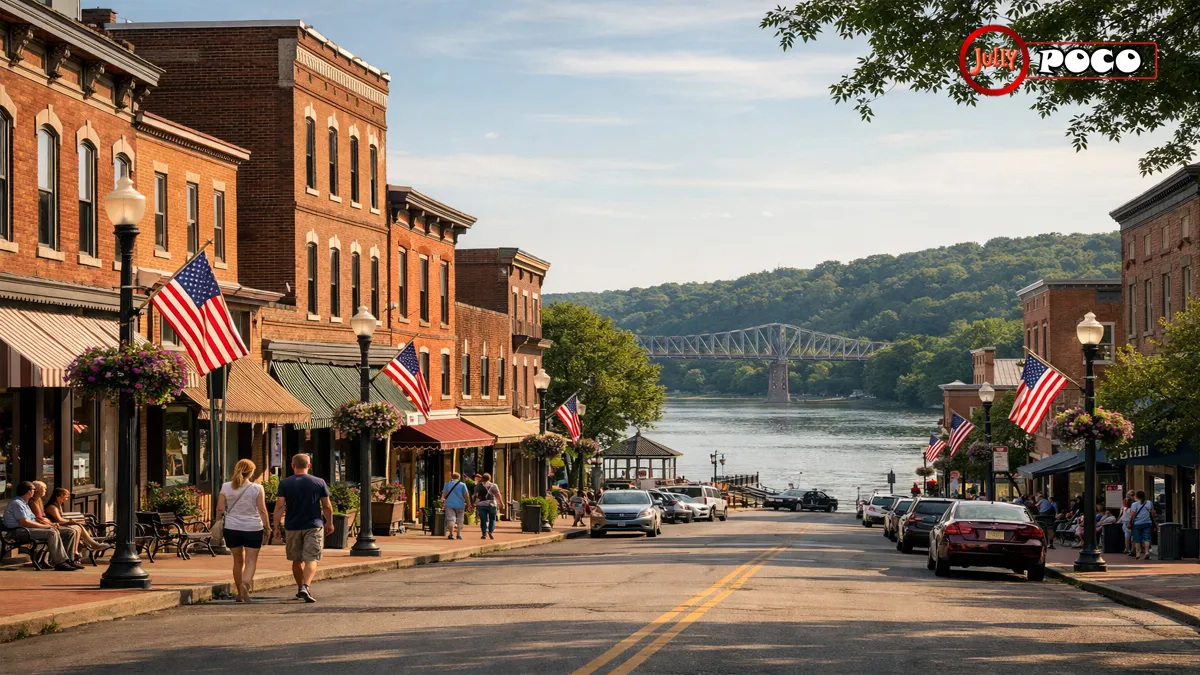
If you have ever passed through wellsburg wv and assumed it was simply a quiet Ohio River town, you are not alone. At first glance, it feels modest, calm, and familiar. Yet that first impression misses something important. Beneath its small-town pace sits a place shaped by frontier survival, early commerce, local storytelling, and civic pride that still shows up today. 🏛️
Located in West Virginia’s Northern Panhandle, Wellsburg blends riverfront history with daily community life. It is home to about 2,450 residents, according to the 2020 census. That number may seem small, but its historical footprint is anything but. From its 18th-century origins to today’s beautification projects, this city offers more depth than many larger places can claim.
So why is this river city more historic than people expect? The answer lies in its founding, its buildings, its people, and the way the community still treats history as a living part of everyday life.
1. It Was Taking Shape Before America Fully Settled Into Itself
One of the biggest surprises about wellsburg wv is just how early its story begins. The area was originally settled by the Cox brothers in 1772. That places it in a period when the region was still rough, contested, and deeply tied to the frontier experience.
The city was chartered in 1791 as Charlestown. It was later renamed Wellsburg in 1816. That means the community’s official roots stretch back more than two centuries.
This matters for one simple reason: many towns feel old because they have old buildings. Wellsburg feels historic because its foundation belongs to the nation’s early formation.
Why that early date matters
A town founded that early likely witnessed:
- Frontier migration
- River-based trade growth
- Early state and county development
- Cultural shifts from settlement to structured civic life
In plain terms, Wellsburg did not appear after history happened. It developed while history was still being written.
According to the City of Wellsburg, the city continues to present itself as a place where heritage and community remain connected. That ongoing civic identity gives its historic timeline even more weight.
2. Its Name Honors a Figure Tied to Early Industry
Many historic towns are named after military leaders or political figures. Wellsburg tells a slightly different story. It was renamed in honor of Alexander Wells, who built the first large flour warehouse in the East.
That detail may sound small, but it reveals something bigger. This was not just a settlement trying to survive. It was becoming a place of economic movement and practical ambition.
What the flour warehouse tells us
A large flour warehouse points to:
- Agricultural trade
- Transportation access
- Storage and distribution networks
- Early economic planning
That kind of industry does not grow in isolation. It needs people, routes, labor, and demand. Since Wellsburg sits along the Ohio River, the location gave it a clear advantage. Like many river communities, it became part of a larger system of exchange. 🌊
Think of the river as the interstate of its era. Goods moved, ideas traveled, and towns like this became local anchors.
3. The Ohio River Made It More Than a Scenic Stop
It is easy to admire the water and stop there. But the Ohio River did more than improve the view. It shaped Wellsburg’s historical importance.
River towns often became gateways. They connected rural producers to wider markets. They also brought in travelers, merchants, and cultural change. In Wellsburg, the waterfront helped support commerce, identity, and civic development.
Historic places like the Wellsburg Wharf reflect that relationship between town and river. A wharf is not just a structure. It is evidence of movement, trade, and purpose.
River history in everyday terms
Imagine a family business in the 1800s. If you wanted to ship flour, tools, or supplies, river access could determine success. That made towns on the Ohio River more valuable than inland communities with fewer transport options.
Wellsburg’s location in Brooke County gave it this advantage early. Today, that riverfront setting still shapes how people understand the town’s past.
Here is a quick snapshot of key facts:
| Feature | Details |
|---|---|
| Location | Northern Panhandle of West Virginia, along the Ohio River |
| Founded | Chartered in 1791 as Charlestown |
| Renamed | 1816, as Wellsburg |
| County | Brooke County |
| Population | 2,450 (2020 Census) |
| Area | 1.33 sq mi |
| ZIP Code | 26070 |
| City Hall | 70 Town Square, Wellsburg, WV 26070 |
This small city’s footprint is compact. Its story is not.
4. Its Historic District Preserves More Than Old Buildings
Some places use history as decoration. Others live inside it. Wellsburg comes closer to the second category.
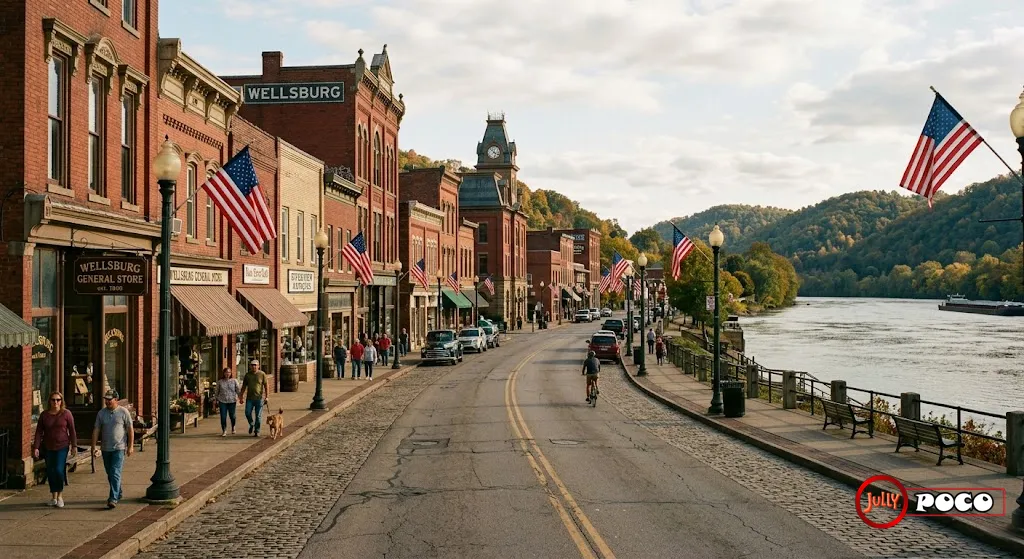
The Wellsburg Historic District was listed in 1982, and that recognition matters. A historic district is not simply a label for tourism brochures. It signals that a place holds architectural, cultural, and historical significance worth protecting.
Why preservation matters
Preserved districts help communities:
- Protect local identity
- Teach younger generations
- Support tourism and downtown activity
- Keep history visible, not abstract
This is especially meaningful in a smaller city. In a place with just over 2,400 residents, preservation takes intention. It shows that the community values continuity.
Landmarks such as Miller’s Tavern and the Wellsburg Wharf deepen that story. They help people picture how the town once functioned. A tavern, for example, was more than a place to gather. It could serve travelers, host conversations, and reflect local economics.
If you want broad historical context, the History of West Virginia helps place river communities like Wellsburg within the state’s early development.
5. It Was Home to People Connected to Major American Stories
This is where Wellsburg becomes especially compelling. It is linked to people whose lives reach beyond local history.
Patrick Gass, a member of the Lewis and Clark expedition, was from Wellsburg. That connection alone gives the city a direct thread to one of America’s most important exploration stories.
Joseph Doddridge also adds historical depth. He was the author of Notes on the Settlement and Indian Wars. His work helps document early frontier life and conflict in the region.
Why these names matter
These are not random residents from the past. They tie Wellsburg to:
- National exploration history
- Early American writing
- Frontier memory and documentation
When a small community produces or houses figures like these, it tells us something about the area’s role in shaping larger narratives.
In simple terms, Wellsburg was not standing on the sidelines. It was connected to the people who helped explain and expand the American story.
For readers interested in population and community data, the U.S. Census Bureau QuickFacts offers useful demographic context for towns like this.
6. Its History Is Still Being Carried Forward Today
Many historic places struggle with a common problem. They honor the past but neglect the present. Wellsburg appears to be taking a more balanced path.
In 2026, local updates show a city that is still investing in itself. One example is the splash pad project, supported by a $25,000 funding boost for the Wellsburg Kiwanis Club. On the surface, that sounds modern rather than historic. But it actually supports a bigger pattern.
Historic towns endure when they continue serving real people.
Why community projects strengthen historic identity
A splash pad, downtown business growth, and nutrition programs may not sound like heritage work. Yet they help preserve the human side of a place.
They show that Wellsburg is not a frozen museum. It is a living city where families, seniors, and children still shape the local story.
Current efforts include:
- A new community splash pad for families 💧
- Senior Farmers Market Nutrition Program support
- Food distribution initiatives
- New downtown businesses, including bakeries and service providers
That balance matters. A city becomes more historically meaningful when it continues to care for its people while honoring its roots.
7. It Is Turning Local History Into Public Art and Tourism
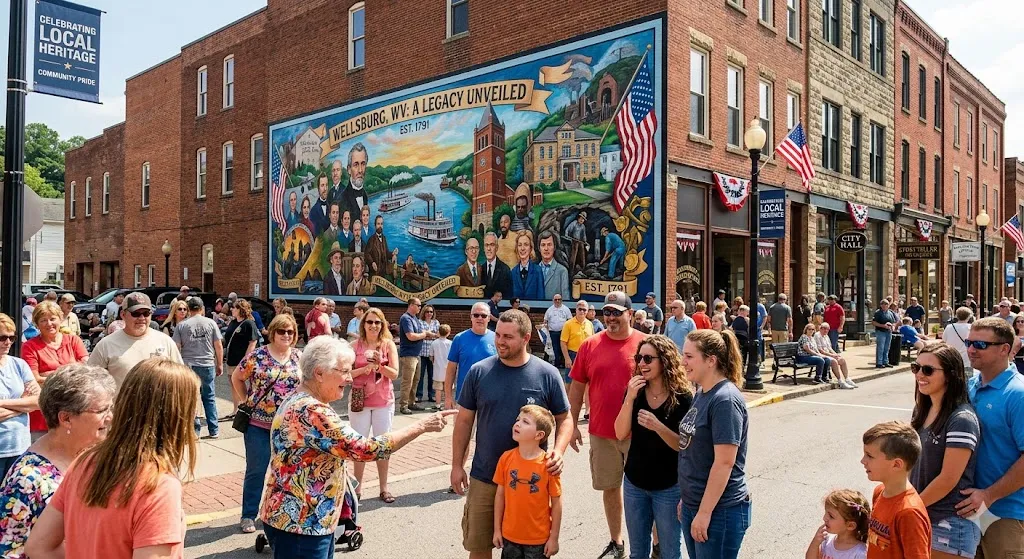
Perhaps the most overlooked reason Wellsburg is more historic than people think is how actively it is using history today. Brooke County, including Wellsburg, is participating in West Virginia’s statewide mural program tied to America’s 250th anniversary.
That is more than beautification. It is public storytelling.
Why murals matter in historic cities
Murals can:
- Make local history visible
- Invite tourism
- Spark pride among residents
- Help children connect with their town’s past
A mural works like a public memory wall. It turns facts into something people can see and discuss. For a community with deep roots, that is a smart and meaningful step. 🎨
Wellsburg is also working on broader beautification and tourism efforts. This suggests a city that understands something important: history becomes stronger when people can experience it, not just read about it.
In that sense, the town’s future and its past are not in conflict. They are moving in the same direction.
A Closer Look at the Community Behind the History
To understand Wellsburg fully, it helps to look beyond landmarks.
This is a close-knit city with a median age of 50.2 years. About 27.8% of residents are over 65. Around 16.6% are under 18. That creates a community where memory and continuity likely carry real weight.
There are 1,159 households and 1,370 housing units. Schools serving the area include Brooke High School and Wellsburg Middle School. Amenities include parks, recreation, a vibrant downtown, and the Brooke County Public Library.
What that means in real life
In many small towns, history survives through stories told at home, at school events, at local libraries, and on main streets. Wellsburg fits that pattern.
A librarian preserving local records.
A teacher explaining regional history.
A family attending a downtown event near a historic site.
These simple moments help keep heritage alive.
Why Wellsburg Deserves More Attention From Travelers
Travelers often chase famous places and overlook quieter ones. That is understandable. Bigger names are easier to find.
But small cities like Wellsburg often offer a more honest experience. You can see the layers more clearly. The river is still there. The historic district still matters. The town square still carries civic purpose. You are not just visiting a destination. You are stepping into a place that still knows itself.
If you enjoy heritage travel, Ohio River towns, Appalachian history, or local architecture, Wellsburg is worth a closer look.
Practical reasons to visit
- Walkable small-town setting
- Historic district and landmarks
- Riverfront atmosphere
- Community events and local businesses
- Easy access in the Northern Panhandle
Even one afternoon can reveal a lot. A downtown walk, a stop by City Hall, and a look at the historic streetscape can change your impression quickly.
FAQs About Wellsburg, West Virginia
1. Where is Wellsburg located?
Wellsburg is in Brooke County in West Virginia’s Northern Panhandle, along the Ohio River.
2. When was Wellsburg founded?
It was chartered in 1791 as Charlestown and renamed Wellsburg in 1816.
3. Why is Wellsburg considered historic?
It has frontier-era roots, a historic district, notable landmarks, and ties to figures like Patrick Gass and Joseph Doddridge.
4. What is the population of Wellsburg?
The 2020 census recorded a population of 2,450 residents.
5. What recent projects are happening in Wellsburg?
Recent efforts include a community splash pad, new businesses downtown, and participation in a statewide mural program for America’s 250th anniversary.
6. Where can I contact the city government?
City Hall is located at 70 Town Square, Wellsburg, WV 26070. Phone: +1-304-737-2104.
Final Thoughts on Wellsburg’s Hidden Historic Depth
At a glance, wellsburg wv may seem like a quiet river town with a modest profile. Look closer, and a richer picture appears. This is a city with roots in the 1700s, a name tied to early industry, a river that shaped trade, and landmarks that still anchor public memory. It also has something many historic places struggle to maintain: a living connection between past and present.
That may be the most surprising fact of all. Wellsburg is not historic only because of what happened there long ago. It feels historic because the community still carries that story forward with care, pride, and practical action. From preservation to murals to family-focused projects, the city continues to build on what came before.
If you are planning a heritage-focused day trip, exploring Brooke County, or simply looking for a place with authentic local character, wellsburg wv deserves your attention. Take a walk downtown. Read the markers. Notice the river. Sometimes the most meaningful history is waiting in the places people almost overlook.
References
Encyclopaedia Britannica, History of West Virginia
U.S. Census Bureau QuickFacts: https://www.census.gov/quickfacts