


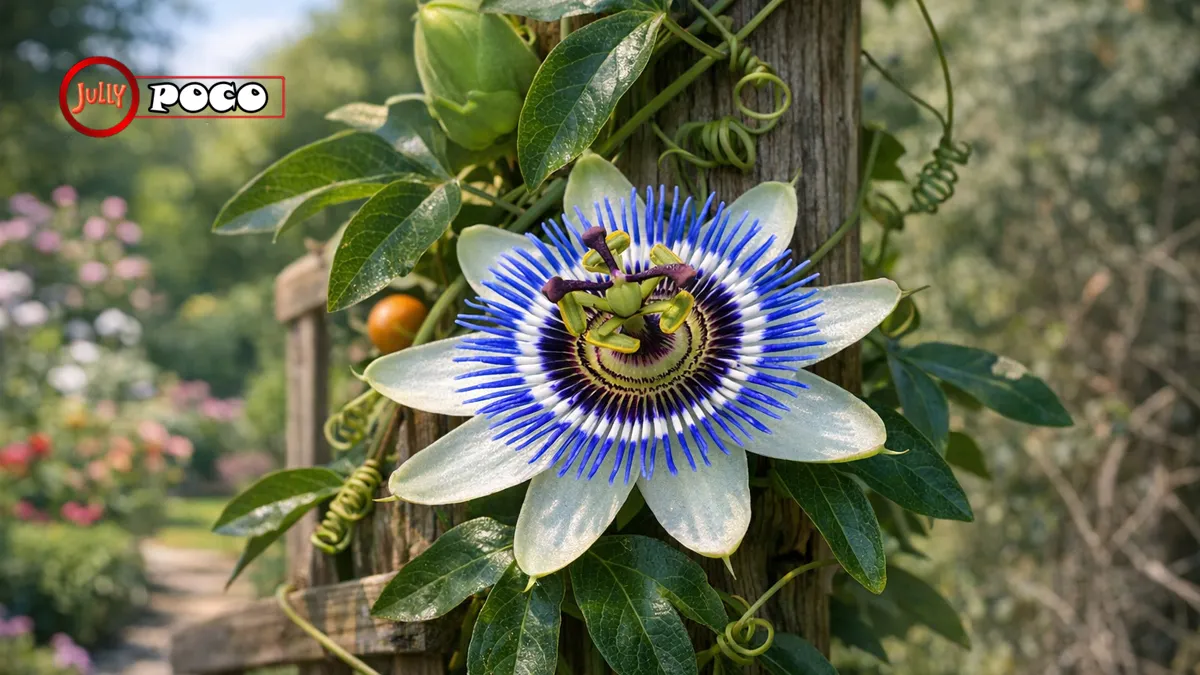
The blue passion flower is one of those plants that makes people stop mid-step. Its bloom looks almost unreal, with white petals, blue-purple filaments, and a structure so intricate it seems hand-designed. Yet this same vine can become a serious problem in the wrong place. For gardeners, it offers drama, fragrance, and fast coverage. For land managers, it can signal ecological risk. Understanding both sides is the key to growing, or avoiding, this striking climber wisely.
Known botanically as Passiflora caerulea, this species has earned admiration across gardens worldwide. It is also restricted or closely watched in some regions because of its invasive behavior. That contrast is what makes it so fascinating. Beauty and risk are both part of its story.
1. What Is Blue Passion Flower?
Passiflora caerulea is a fast-growing climbing vine native to South America, especially parts of Brazil, Argentina, Paraguay, and Uruguay. It belongs to the Passifloraceae family and is one of the hardiest passion flowers grown in temperate gardens.
It is often called:
- Blue passion flower
- Blue crown passionflower
- Passion vine
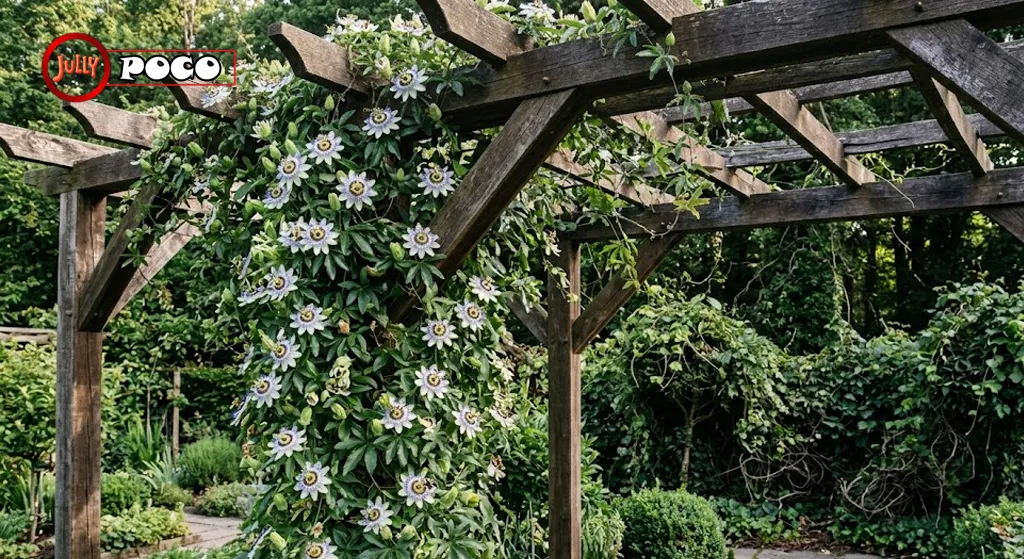
This vine climbs by curling tendrils around supports. Give it a fence, pergola, or trellis, and it will quickly make itself at home.
Key traits at a glance
| Feature | Details |
|---|---|
| Botanical name | Passiflora caerulea |
| Plant type | Semi-evergreen climbing vine |
| Mature length | 10–40 feet |
| Flower color | White with blue and purple filaments |
| Bloom season | Summer to early autumn |
| Fruit | Orange, egg-shaped berries |
| Sun needs | Full sun to partial shade |
| Hardiness | Can survive light to moderate frost |
Its flowers are the main attraction. Each bloom looks layered and architectural, with a fringe-like corona that gives the plant its exotic character. The fruit adds interest, though it is not usually grown for flavor.
2. Why Gardeners Love This Vine
There is a reason the blue passion flower remains popular in ornamental gardening. It offers quick visual impact without needing years to mature.
It creates instant vertical beauty
If you have a plain wall, old fence, or bare arbor, this vine can soften it within a season or two. Many gardeners use it to make small outdoor spaces feel lush.
The flowers feel rare and memorable
Some plants blend into the background. This one does not. Even one open bloom can become the focus of a garden bed.
It attracts pollinators
The nectar-rich flowers can draw bees, butterflies, and other pollinating insects. In managed garden settings, this can be a genuine benefit.
It handles cooler weather better than many passionflowers
Unlike some tropical relatives, Passiflora caerulea can tolerate colder winters. In cool climates, top growth may die back and then return from the roots in spring.
A practical example: a homeowner in a mild coastal area may use it to cover a pergola for summer shade. In warmer regions, though, that same plant may spread far beyond the pergola if left unchecked.
3. How to Identify Passiflora caerulea Correctly
Correct identification matters. Many people confuse this species with edible passion fruit, especially Passiflora edulis. They are related, but they are not the same plant.
Look for these features
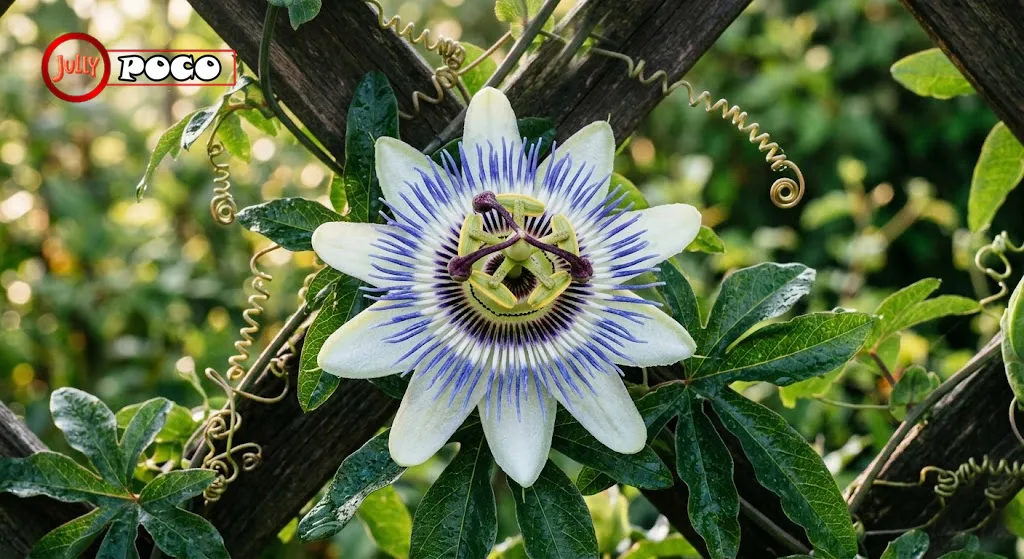
- Leaves with 5 to 7 deep lobes
- Twining tendrils at the leaf joints
- Flowers around 3 inches wide
- White petals with blue, violet, and purple filaments
- Round to egg-shaped orange fruit
The fruit of Passiflora caerulea is mildly edible when ripe, but it is often described as bland. It should not be treated as a culinary passion fruit substitute.
Why confusion can be risky
Misidentification can lead to poor planting decisions. Someone wanting edible fruit may be disappointed. In regulated regions, planting the wrong species may also create legal or environmental problems.
For reliable plant identification and horticultural details, the Gardenia Passiflora caerulea profile offers a useful overview.
4. How to Grow It Safely in the Right Climate
If this vine is allowed in your region, growing it well starts with smart placement and firm boundaries.
Light
It flowers best in:
- Full sun in cooler climates
- Partial shade in very hot areas
Too much shade often means fewer flowers and leggier growth.
Soil
It prefers loose, well-drained soil. Sandy or gravelly ground works well if moisture does not sit around the roots.
Water
Once established, it can handle some dry spells. Still, regular deep watering during active growth supports better flowering.
A simple watering rule:
- Water deeply
- Let the top layer dry slightly
- Reduce watering in winter
Feeding
Use fertilizer sparingly. Too much nitrogen encourages leaves over flowers.
Pruning
Prune in late winter or early spring. This plant blooms on new growth, so seasonal pruning can improve shape and flowering.
Best places to train it
- Trellises
- Pergolas
- Fences
- Large containers with support
Growing it in a container can help limit spread. For cautious gardeners, this is one of the smartest options.
5. The Hidden Risk: Why It Becomes Invasive
This is where the story changes. In some climates, the blue passion flower is not just vigorous. It is invasive.
How it spreads
It can spread through:
- Seeds carried by birds
- Fruit eaten by mammals
- Layering stems that root where they touch soil
- Dumped garden waste
- Unchecked growth beyond property lines
Once established in wild areas, it may scramble over shrubs and trees, blocking sunlight and suppressing young native plants.
Where this is a major concern
New Zealand is one of the clearest examples. There, this vine is treated as an environmental pest in certain contexts. Official guidance warns against breeding, selling, or distributing it under national pest rules. The National Pest Plant Accord resource explains its regulatory status and ecological impact.
Australia has also reported concern in some areas, especially where mild conditions support year-round spread.
Why invasiveness matters
An ornamental plant does not stay harmless simply because it looks beautiful. If it escapes gardens, it can alter habitats, crowd native species, and increase weed management costs.
This dual identity is what makes Passiflora caerulea so important to discuss honestly.
6. Toxicity, Pets, and Household Safety
Many gardeners ask whether passion flowers are safe around children and pets. The answer is: be careful.
Parts of this plant contain compounds called cyanogenic glycosides. These occur in several species within the genus. Leaves and stems are the main concern.
Potential safety issues
- Not suitable for casual nibbling
- May pose a risk to cats, dogs, and horses
- Should be kept away from small children
The fruit is often described as technically edible when fully ripe, but it is not highly valued for taste. It is best not to treat it like a snack crop unless you have verified the species and local safety guidance.
For animal owners, placement matters. A vine trained high on a wall is different from one trailing at nose level beside a pet run.
7. Pollinator Value vs. Ecosystem Harm
This plant creates a real gardening dilemma. It can support pollinators, yet still harm the broader environment if it spreads.
Benefits in controlled gardens
- Nectar source for bees and butterflies
- Shelter and screening value
- Long ornamental season
Risks in natural landscapes
- Smothers native vegetation
- Reduces light for seedlings
- Helps invasive animals spread seeds
- Increases weed pressure in sensitive habitats
This is a useful reminder that “pollinator-friendly” does not always mean “ecologically safe.” A plant can help insects in a backyard while still damaging native ecosystems nearby.
A balanced gardener looks at both scales:
- What helps my garden?
- What protects my region?
8. Cultural Meaning and Symbolism
Passion flowers carry centuries of symbolism. Missionaries once linked the flower’s unusual structure to Christian imagery and referred to it as the “Flower of the Five Wounds.” Parts of the bloom were interpreted as symbols of the Passion of Christ.
Even today, this symbolism adds to the plant’s appeal. It feels layered, not only botanically but culturally. Gardeners often choose it because it tells a story, not just because it climbs fast.
That said, symbolism should never overshadow practical concerns. A meaningful plant can still be the wrong plant for a given place.
9. Should You Plant It? A Smart Decision Checklist
Before planting blue passion flower, ask these questions:
Plant it only if:
- It is legal in your area
- Your climate does not encourage harmful spread
- You can prune and monitor it regularly
- You have a contained support structure
- Pets and children will not access risky parts easily
Avoid it if:
- It is listed as invasive locally
- You live near bushland, waterways, or natural reserves
- You want edible passion fruit
- You prefer low-maintenance vines
- You cannot manage fast growth
Better practice for responsible gardeners
- Check local council or agricultural rules
- Remove fruit before it drops
- Dispose of cuttings securely
- Do not dump garden waste
- Consider container growing
If you want a vine with less ecological concern, compare local native climbers first. Regional native plant guides are often the safest starting point. The Royal Horticultural Society also offers broad gardening guidance for ornamental climbers and plant care.
10. Common Questions About This Plant
FAQs
Is blue passion flower invasive everywhere?
No. It depends on climate and local ecology. In some regions it behaves well. In others, it spreads aggressively.
Is Passiflora caerulea the same as edible passion fruit?
No. They are related but different species. Edible commercial passion fruit is usually Passiflora edulis.
Can blue passion flower grow in pots?
Yes. Large containers can help control its size and spread. It still needs strong support and regular pruning.
Is the fruit safe to eat?
The ripe fruit is sometimes described as edible, but bland. Because confusion with other species is common, caution is wise.
Does it survive frost?
Yes, often better than many other passionflowers. In cold winters, top growth may die back and regrow from the roots.
How do I stop it from taking over?
Prune hard each year, remove fruit, watch for rooted stems, and never dump trimmings into natural areas.
Final Thoughts
The blue passion flower earns its fame honestly. Few climbers match its visual drama, resilience, and ability to transform a space. But beauty should never cancel out responsibility. In one garden, it may be a treasured feature vine. In another landscape, it may become a costly invader.
If you are considering Passiflora caerulea, start with local rules, not just garden inspiration. Grow it only where it is safe, legal, and manageable. If your region flags it as a pest, choose an alternative and protect nearby ecosystems. The best gardening decisions are not only beautiful. They are informed.
Suggested internal linking anchor texts
- how to choose the best flowering climbers
- invasive garden plants to avoid
- safe plants for pet-friendly gardens
References
- Auckland Council / Tiaki Tāmaki Makaurau: National Pest Plant Accord guidance on Passiflora caerulea
- Gardenia: Horticultural profile for Passiflora caerulea
- Royal Horticultural Society: General ornamental vine care and garden best practices