



When people search for katja dofel todesursache, they are often looking for clarity in the middle of grief, rumor, and online speculation. The truth, however, is more restrained and more human than many headlines suggest. Katja Dofel, one of Germany’s best-known financial journalists, died on August 3, 2023, in Frankfurt am Main at the age of 52. The only officially confirmed cause was a serious illness. No further diagnosis was publicly shared by her family or employer, and reliable reporting has respected that boundary.
That fact matters. In moments like this, the line between public interest and private pain becomes very thin. Katja Dofel’s death sparked sadness across the German media world, but it also raised questions about ethics, privacy, and how we remember public figures. She was not only a television face. She was a skilled journalist, a teacher, and a translator of complex economic stories for everyday viewers.
This article looks at the confirmed facts, her life and work, the public reaction, and why her legacy still matters. It also explains why responsible coverage of katja dofel todesursache must begin with truth, not speculation.
1. Who Was Katja Dofel?
Katja Dofel built a career that combined intelligence, calm authority, and real market expertise. She was born on July 7, 1971, in Munich, Germany. Her academic path already showed wide interests and strong discipline.
She studied:
- Political science
- Economics
- Literature
She attended Ludwig Maximilian University of Munich and also spent a year abroad in Edinburgh. That international perspective later shaped her reporting style. She was able to explain global markets in ways that felt grounded and accessible.
Her career moved steadily upward:
- In 1996, she worked as a freelance journalist at Süddeutsche Zeitung
- From 1997 to 1999, she served as a Wall Street correspondent in New York
- In 2000, she joined n-tv as a stock market reporter
- In 2001, she became head of n-tv’s Frankfurt Stock Exchange studio
- She later taught at Goethe University Frankfurt and Nürtingen-Geislingen University
- In 2022, she moved to the asset management firm Flossbach von Storch in Cologne
This timeline shows more than professional success. It shows trust. In financial journalism, trust is everything. Markets move on information, but audiences stay loyal to journalists who make that information understandable.
A recognizable voice in German finance
For many viewers, Katja Dofel was the face of stock market reporting. She reported from places where numbers, sentiment, and breaking events met in real time. That role requires speed, confidence, and precision.
She had all three.
2. What Is Officially Known About Katja Dofel Todesursache?
The most important point is also the simplest one: katja dofel todesursache was officially reported only as a serious illness.
That description came through credible sources, including statements cited by n-tv and her family. No publicly verified report named a specific disease or medical condition. This is not a gap to fill with guesses. It is a privacy boundary to respect.
Confirmed facts at a glance
| Fact | Confirmed Information |
|---|---|
| Full Name | Katja Dofel |
| Date of Birth | July 7, 1971 |
| Place of Birth | Munich, Germany |
| Date of Death | August 3, 2023 |
| Place of Death | Frankfurt am Main |
| Age | 52 |
| Official Cause of Death | Serious illness |
| Public Medical Details | Not disclosed |
This table reflects the reliable public record.
Why no diagnosis was published
Families often choose not to disclose medical details after a death. That decision can be emotional, cultural, and deeply personal. Public figures may be well known, but they do not lose their right to dignity.
In this case, media coverage in Germany largely followed that principle. That approach reflects a broader standard in reporting: share what is verified, and stop where privacy begins.
For readers searching for answers, that can feel frustrating. But it is also a reminder that not every silence hides a secret. Sometimes silence protects the people left behind.
3. Why Speculation Around Her Final Days Is Misleading
The phrase “shocking truth” often attracts attention online. Yet the real truth here is that there is no verified hidden revelation behind Katja Dofel’s final days. The public record remains consistent: she died after a serious illness, and the details were kept private.
That is why any article claiming a secret diagnosis without evidence should be treated carefully.
Three reasons speculation harms more than it helps
1. It distorts the facts
Once rumors spread, readers may mistake repetition for proof. But repeated claims are not the same as verified reporting.
2. It burdens grieving families
Speculation can reopen pain. It can also force relatives to defend boundaries they already made clear.
3. It distracts from a person’s life
Katja Dofel’s career, teaching, and impact deserve more attention than unsupported gossip.
A helpful way to think about this is simple. If a respected newsroom would not print it without proof, readers should not accept it as fact either.
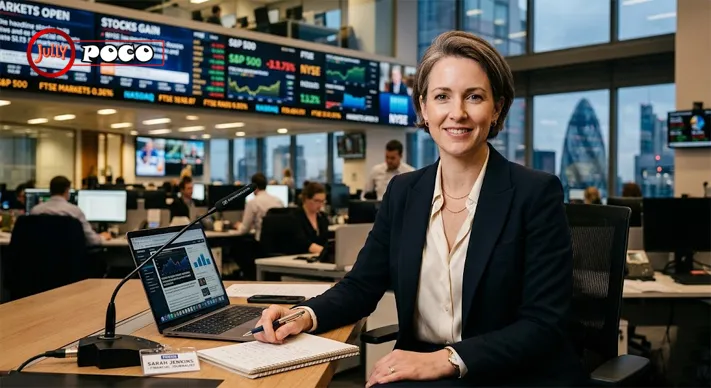
4. How n-tv, Family, and Colleagues Remembered Her
The reaction to her death was immediate and heartfelt. n-tv described Katja Dofel as a passionate and tireless journalist. That wording was not ceremonial. It matched the public image she had built over decades.
Financial reporting is demanding work. It requires early mornings, long market days, fast analysis, and a clear voice under pressure. Colleagues recognized that Dofel had delivered all of this with consistency.
Her family’s moving message
Her husband, Mario Müller-Dofel, asked that she be remembered as:
- Colorful
- Full of life
- Always bullish about the future
That last phrase feels especially fitting. In market language, “bullish” means optimistic about what lies ahead. Used here, it becomes deeply personal. It paints a picture of someone who looked forward, even when life became difficult.
Industry reaction
Across business media and financial circles, people expressed shock and sadness. Many described her as one of the most recognizable figures in German stock market journalism.
This response tells us something important. Katja Dofel was not only visible. She was respected.
For context on professional reporting standards and media culture in Germany, readers may find the n-tv newsroom archive useful. It helps place her work within the network she helped shape.
5. Her Career Was a Model of Expertise and Clarity
To understand why her death touched so many people, it helps to understand how she worked.
Katja Dofel entered journalism at a time when financial news often felt distant to general audiences. Markets could seem like a language of codes, charts, and insider terms. Her strength was making that world understandable.
She brought Wall Street experience home
Her years in New York mattered. Reporting as a Wall Street correspondent gave her front-row exposure to global finance. She saw how international trends influenced local economies. Later, she brought that perspective into German television.
That made her reporting more than routine market commentary. It gave viewers context.
She made complex issues easier to follow
A good financial journalist does not just repeat data. They explain what the data means in real life.
For example:
- If inflation rises, what happens to family budgets?
- If stock prices fall, why do investor nerves spread so fast?
- If central banks act, why should ordinary viewers care?
Dofel understood that economic journalism works best when it connects numbers to everyday consequences.
Readers interested in her academic and professional background can also explore Goethe University Frankfurt for context on the institutions where she taught and shared her expertise.
6. Katja Dofel’s Legacy in Financial Journalism
Any discussion of katja dofel todesursache should also make room for what she left behind. Her legacy is much larger than the circumstances of her death.
She helped shape a generation of German business reporting. She also showed that financial journalism could be clear without being simplistic.
A trailblazer in a male-dominated field
Finance and business journalism have long been male dominated. Women in the field often face extra scrutiny about authority, tone, and expertise. Katja Dofel earned credibility in an environment that can be hard to enter and harder to lead.
Her presence mattered because it normalized something important: expert financial reporting delivered by a woman who clearly belonged at the center of the story.
She also taught the next generation
Her roles as a lecturer reveal another side of her impact. Teaching is not a side note. It is legacy in action.
Students benefit most from instructors who know both theory and practice. Dofel had both. She understood the newsroom, the market, and the classroom.
That combination is rare.
7. What Her Passing Says About Media Ethics
The coverage of katja dofel todesursache is also a useful case study in responsible journalism. German media, especially established outlets, generally avoided publishing unverified medical claims. That restraint deserves attention.
Why privacy matters in public reporting
There is a common assumption that public figures owe the public every detail of their lives. Ethically, that is not true.
A journalist’s work is public. Their private medical history is not automatically public.
This distinction matters because trust in media depends on discipline. When journalists report only what they know, they protect both credibility and humanity.
The balance between transparency and restraint
Responsible coverage often asks two questions:
- Is this information verified?
- Is this information necessary for the public to know?
In Katja Dofel’s case, the official statement about a serious illness answered the first question. The refusal to disclose more reflected the second.
For broader context on ethical reporting and public communication, the Deutsche Journalistinnen- und Journalisten-Union offers insight into journalism standards and professional values in Germany.

8. Why Her Story Still Resonates Today
Katja Dofel’s death came at a time when trust in information feels fragile. Economic uncertainty, market swings, and misinformation have made credible journalism more important than ever.
That is one reason her story continues to resonate.
She represented calm during complexity
In uncertain times, audiences look for guides who can interpret fast-moving events. Dofel filled that role for years. She translated market noise into something viewers could understand.
Her career still offers practical lessons
For journalists:
- Verify before publishing
- Explain before impressing
- Protect trust like a long-term asset
For readers:
- Prefer reliable outlets over rumor sites
- Distinguish headlines from evidence
- Respect privacy when facts are limited
These lessons are simple, but powerful. They also help explain why the discussion around katja dofel todesursache should remain rooted in facts, not invented detail.
Frequently Asked Questions
1. What was Katja Dofel’s cause of death?
Official reports stated that she died after a serious illness. No specific diagnosis was publicly disclosed.
2. When did Katja Dofel die?
She died on August 3, 2023.
3. How old was Katja Dofel when she passed away?
She was 52 years old.
4. Where did Katja Dofel die?
She died in Frankfurt am Main, Germany.
5. Why are there no more details about her illness?
Her family and employer chose to keep the medical details private. Reliable media respected that decision.
6. What is Katja Dofel best known for?
She is best known for her work as a financial journalist and stock market reporter, especially at n-tv.
Conclusion
The public interest in katja dofel todesursache is understandable. She was a familiar and respected figure, and her death came far too soon. Still, the confirmed truth remains unchanged: Katja Dofel died on August 3, 2023, at age 52, after a serious illness. No verified source has published further medical details, and responsible coverage should honor that limit.
What deserves equal attention is the life she lived. She was a sharp journalist, a skilled interpreter of financial news, and a teacher who helped others understand a demanding field. She brought global experience, local clarity, and personal credibility to her work. That is a meaningful legacy.
If you are writing, researching, or sharing information about her, choose reliable sources and avoid speculation. In stories like this, accuracy is not just professional. It is respectful.
References
- n-tv – https://www.n-tv.de/
- Goethe University Frankfurt – https://www.goethe-university-frankfurt.de/
- Deutsche Journalistinnen- und Journalisten-Union – https://www.dju.verdi.de/


Job Title: Content Writer
Institutional Affiliation: Jullypoco Digital Properties
Specialties: Editorial Content Writing | Digital Publishing & Storytelling | On-Page SEO
Muhammad Jawad is a passionate content writer at Jullypoco, dedicated to crafting insightful, engaging, and reader-friendly articles across diverse topics. With a sharp eye for detail and a flair for storytelling, he transforms complex ideas into clear, compelling narratives that resonate with audiences. Driven by curiosity and creativity, Jawad focuses on delivering content that not only informs but also inspires. His work reflects a commitment to quality, originality, and SEO best practices—ensuring every piece adds value to readers while strengthening Jullypoco’s authority as a trusted magazine platform.
Verify Credentials & Connect:
🌐 Official Jullypoco Author Hub |
👥 Facebook Profile |
📩 Direct Email Contact