


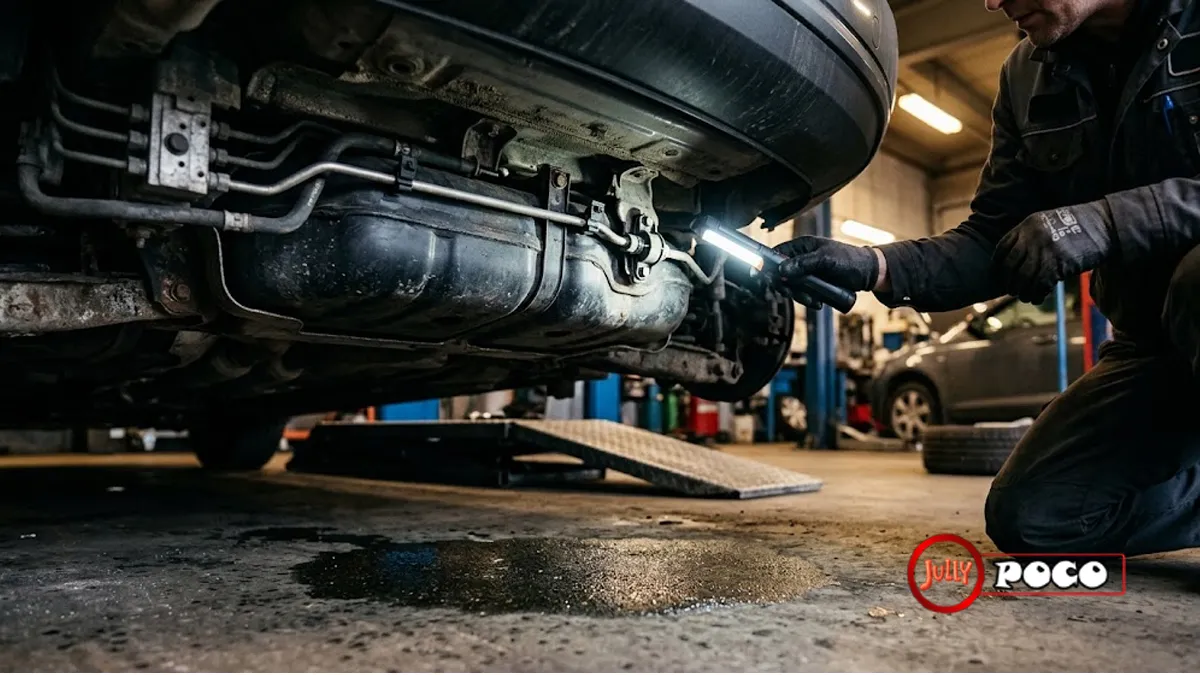
A gasoline smell from your vehicle can turn an ordinary drive into an immediate worry. When I walk through this problem with drivers, I start with one simple question: Are we dealing with liquid gasoline, or only fuel vapor? That distinction can narrow the possibilities quickly. The causes of gas leaking from car range from a loose gas cap to a cracked fuel line, leaking injector, damaged fuel tank, or EVAP-system fault. Some problems are inexpensive. Others are genuine fire hazards.
The safest approach is not to guess. Look for patterns, understand the symptoms, and know when to stop driving.
If you’re also dealing with other warning signs, topics such as What does it mean when engine light is blinking and Why Is My Steering Wheel Shaking When I Brake can help you separate a fuel-system problem from unrelated vehicle issues.
What Are the Main Causes of Gas Leaking From Car?
A car’s fuel system is more than just a gas tank. It includes fuel lines, pumps, injectors, seals, the filler neck, and the evaporative-emissions or EVAP system.
The most common causes include:
- Loose or damaged gas cap
- Cracked or corroded fuel lines
- Damaged fuel tank
- Leaking fuel injector or injector O-ring
- Fuel-rail or connection leak
- Fuel-pump seal or module failure
- Cracked filler neck or hose
- EVAP system leak
- Failed purge or vent valve
- Damaged vapor hoses or charcoal canister
- Fuel-pressure system problems
- Corrosion, collision damage, road debris, or poor previous repairs
The important point is that not every gasoline smell means liquid fuel is dripping.
Gasoline is volatile, meaning it evaporates readily. The EPA also regulates gasoline volatility because evaporative fuel emissions can escape into the atmosphere.
That is why a driver can notice a strong gasoline odor even when the pavement underneath the vehicle looks completely dry.
1. Loose or Damaged Gas Cap
The gas cap is one of the simplest places to start.
A properly fitted cap seals the fuel tank and helps keep fuel vapor inside the system. If the cap is loose, cracked, contaminated, or has a damaged seal, gasoline vapor can escape.
Typical clues include:
- Gasoline smell near the fuel door
- Odor appearing after refueling
- No visible gasoline underneath the car
- Check-engine light in some vehicles
- Smell that comes and goes
I always recommend checking the obvious things before assuming the worst. If the cap was recently removed, reinstall it correctly and inspect the sealing surface. If the cap is visibly damaged, replacement is usually far less expensive than a major fuel-system repair.
Still, don’t dismiss a persistent gasoline smell in car simply because the cap looks fine.
2. Cracked, Rusted, or Damaged Fuel Lines
Fuel lines transport gasoline from the tank toward the engine. Depending on the vehicle, sections may use metal tubing, rubber hose, or specialized flexible lines.
Age, corrosion, road debris, heat, and physical damage can compromise them.
Common fuel line leak symptoms include:
- Strong gasoline odor
- Wetness underneath the vehicle
- Visible dripping
- Odor becoming stronger while driving
- Fuel smell around the middle or front of the vehicle
- Poor engine performance in severe cases
A pressurized fuel leak deserves particular attention. Gasoline escaping near a hot engine or exhaust component creates an obvious safety concern.
Do not drive with an active fuel-line leak.
3. Damaged or Leaking Fuel Tank
A fuel tank can develop problems because of corrosion, impact, damaged seams, deteriorated seals, or damage around the fuel-pump opening.
Typical fuel tank leak symptoms include:
- Gasoline odor near the rear
- Wetness around the tank
- Drips underneath the rear of the vehicle
- Faster-than-normal fuel loss
- Stronger smell after filling the tank
A tank problem can be particularly noticeable when the vehicle has just been filled because the fuel level is higher.
NHTSA’s fuel-system safety standards specifically address fuel-system integrity and reducing deaths and injuries from fires involving fuel spillage after crashes.
That doesn’t mean every odor indicates a dangerous tank failure. It does mean an active gasoline leak should be treated as a safety problem, not merely an inconvenience.
4. Leaking Fuel Injectors or Injector Seals
Fuel injectors deliver pressurized fuel to the engine. A damaged injector body or deteriorated O-ring can allow gasoline to escape.
This is one reason a fuel injector leak deserves prompt attention. The engine compartment contains heat sources, electrical components, and other potential ignition sources.
You might notice:
- Gas smell under the hood
- Odor that becomes stronger after driving
- Rough idle
- Misfires
- Poor fuel economy
- Hard starting
- No obvious puddle
A tiny leak can evaporate quickly, so the absence of a puddle does not rule out an injector problem.
RepairPal’s June 18, 2026 estimate puts the average U.S. cost of fuel-injector replacement at $764–$947, excluding taxes and fees. The actual cost varies considerably by vehicle.
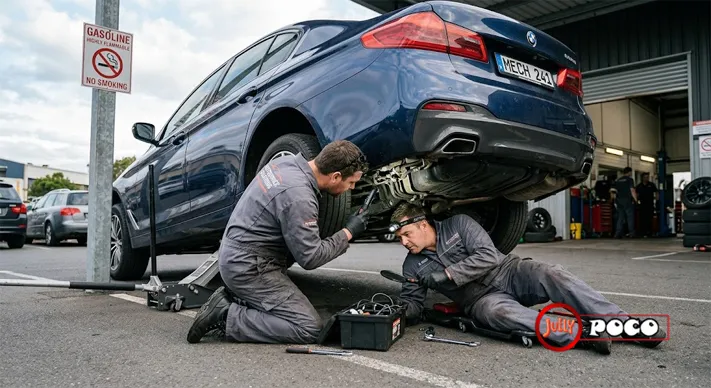
Car Smells Like Gas but No Visible Leak
This is one of the most searched—and most misunderstood—fuel-system problems.
If your car smells like gas but no visible leak can be found, there are several possible explanations.
The first is an EVAP problem.
What Is the EVAP System?
The evaporative-emissions system captures gasoline vapors from the fuel tank rather than allowing them to escape freely. Components can include:
- Vapor hoses
- Charcoal canister
- Purge valve
- Vent valve
- Fuel-tank pressure sensor
- Seals and connections
EPA documentation describes EVAP systems as containing fuel vapors through components such as the fuel tank, filler system, carbon canister, and purge valve.
A small EVAP system leak can therefore create a gasoline odor without producing a puddle.
For a deeper technical reference, EVAP system leak information from the U.S. Environmental Protection Agency explains the role of evaporative emissions controls.
Other possibilities include:
- Loose gas cap
- Cracked EVAP hose
- Faulty purge valve
- Faulty vent valve
- Damaged charcoal canister
- Small injector seep
- Fuel-rail leak
- Fuel vapor escaping around the tank
- Gasoline spilled during refueling
What About an OBD-II Code?
If the check-engine light is illuminated, a diagnostic scan can provide useful clues.
EVAP-related codes commonly fall within the P0440–P0457 range, although a code does not automatically identify the failed physical component. A technician still needs to diagnose the system.
This is an important distinction. A diagnostic code tells us where the vehicle’s computer detected an abnormal condition. It does not necessarily tell us which hose, valve, seal, or connection needs replacement.
How to Tell if Fuel Line or Gas Tank Is Leaking
You should not crawl beneath a suspected leaking vehicle while it is running or start manipulating fuel-system components yourself.
However, the location and timing of the odor can provide useful clues for a technician.
| Symptom | More likely area |
|---|---|
| Smell around fuel door | Gas cap, filler neck, EVAP |
| Smell near rear underside | Fuel tank, EVAP, fuel lines |
| Gas dripping near tank | Tank, tank fitting, fuel line |
| Smell under hood | Injector, fuel rail, engine-bay fuel line |
| Smell gets stronger when hot | Injector, rail, small engine-bay seep |
| Gas smell with no puddle | EVAP/vapor leak or tiny evaporating seep |
| Smell mainly after filling | Cap, filler system, EVAP, spilled fuel |
| Persistent smell while driving | Possible active fuel-system leak |
One practical lesson is easy to overlook: the place where you see fuel is not always the place where the leak begins.
Gasoline can travel along an underbody surface before dripping. Vapor can also move through the engine compartment.
That is why professional diagnosis matters.
What to Do If Car Is Leaking Gas
Knowing what to do if car is leaking gas is more important than knowing the exact failed component.
If you see liquid gasoline actively leaking, take these steps:
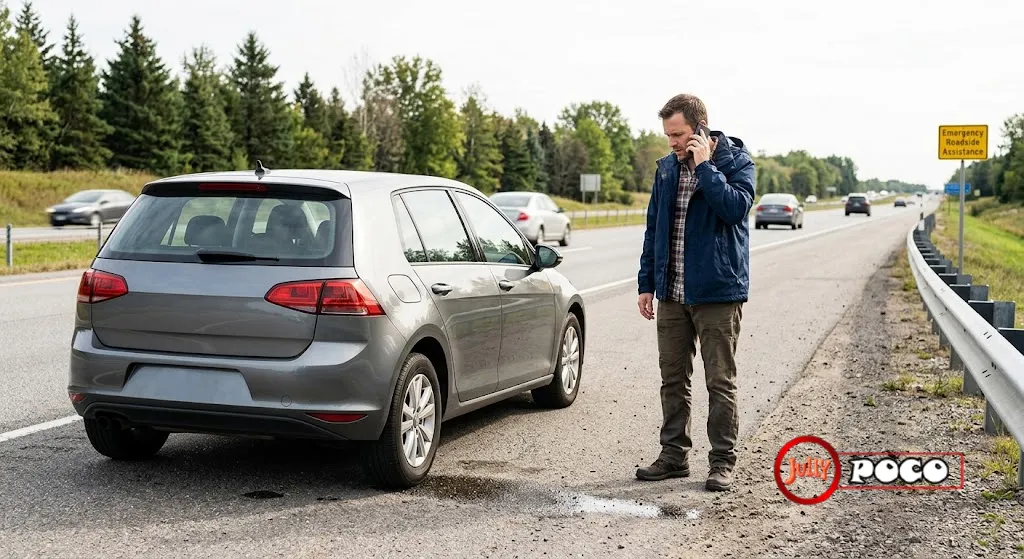
1. Stop driving
If you’re already moving, pull over somewhere safe when you can do so without creating a traffic hazard.
2. Shut the engine off
Don’t keep driving because “the car still runs fine.” A vehicle can operate normally while a fuel leak is developing.
3. Stay away from ignition sources
Do not smoke. Avoid flames, matches, sparks, and other ignition sources.
4. Keep people away
Passengers and bystanders should move away from the vehicle, particularly if there is a strong fuel odor or visible spill.
5. Don’t improvise a repair
Avoid tape, household sealants, random adhesives, or makeshift plugs.
A fuel-system component needs a repair method and replacement material appropriate for gasoline and that specific vehicle.
6. Arrange professional help
If liquid fuel is actively escaping, towing or professional recovery is generally safer than driving to a repair shop.
Fuel-system repairs also require appropriate fire precautions. RepairPal specifically warns that injector replacement involves fire risk and recommends professional handling.
When Is a Gas Leak an Emergency?
Not every gasoline odor has the same level of urgency.
I would treat the situation as especially serious when you notice:
- Visible gasoline dripping
- A growing puddle
- A very strong odor
- Fuel smell inside the cabin
- Smoke
- Gasoline smell under the hood
- A sudden increase in odor
- Engine misfire or rough running alongside the smell
- A leak after a collision
A useful rule is simple:
Visible liquid gasoline plus a strong odor means don’t drive.
A small EVAP vapor leak may not present the same immediate hazard as gasoline actively dripping onto a hot component. But it still needs attention, especially when the odor is persistent.
How Much Does It Cost to Fix a Gas Leak in a Car?
The cost to fix a gas leak in a car can range from almost nothing to several thousand dollars.
That’s because “gas leak” describes a symptom, not a single repair.
| Problem | Typical cost category |
|---|---|
| Tighten gas cap | $0 |
| Replace gas cap | Low |
| EVAP hose or seal | Low to moderate |
| EVAP diagnosis/smoke test | Moderate |
| Purge or vent valve | Moderate |
| Injector seal | Moderate |
| Fuel line | Moderate to high |
| Fuel-pump seal/module | Moderate to high |
| Fuel injector replacement | Hundreds to $1,000+ |
| Fuel tank replacement | Often $1,000+ |
For current U.S. reference data, RepairPal lists fuel-injector replacement at $764–$947 and fuel-tank replacement at $1,674–$1,883, both updated June 18, 2026. These figures exclude taxes and fees and can vary significantly by vehicle and location.
Why Repair Costs Vary
Several factors influence the final bill.
Vehicle design: Some fuel components are easy to access. Others require substantial disassembly.
Leak location: A simple hose can be inexpensive, while a tank-mounted component may require significant labor.
Parts: OEM components may cost more than aftermarket alternatives.
Labor rates: Dealer and independent-shop rates differ by location.
Diagnosis: Intermittent EVAP leaks may require additional testing before the technician identifies the failed part.
Corrosion: Rusted fittings, lines, brackets, and fasteners can turn a straightforward repair into a larger job.
How Mechanics Find a Gas Leak
A professional diagnosis usually begins with a visual inspection and careful attention to where the odor is strongest.
The technician may inspect:
- Gas cap and filler neck
- Fuel tank
- Fuel lines
- Fuel-pump assembly
- Fuel rail
- Injectors and seals
- EVAP hoses
- Purge and vent valves
- Charcoal canister
- Fuel-pressure components
- Diagnostic trouble codes
If the source isn’t obvious, an EVAP smoke test may help.
During a smoke test, a technician uses diagnostic equipment to introduce smoke into the appropriate system and observe where it escapes. This can reveal small vapor leaks that are difficult to see during a normal visual inspection.
That is one reason I would avoid replacing parts based solely on smell location or a generic online diagnosis. Good troubleshooting narrows the problem before spending money.
Gas Smell Patterns That Can Help Identify the Problem
Gas Smell After Filling Up
Possible explanations include:
- Spilled gasoline
- Loose gas cap
- Damaged cap seal
- Filler-neck problem
- EVAP fault
- Overfilling
A smell that disappears after a minor spill may not indicate a mechanical failure. But if the same odor returns after every refueling, the fuel system deserves inspection.
Gas Smell Inside the Cabin
This deserves particular attention.
Potential causes include:
- Fuel-line leak
- Injector leak
- Fuel-rail leak
- EVAP vapor entering the ventilation system
- Filler or tank problem
- Another issue producing a fuel-like odor
Don’t normalize a persistent fuel smell inside the passenger compartment.
Gas Smell Under the Hood
Think about injectors, injector seals, fuel rails, fuel lines, and related fuel-system connections.
If the odor becomes stronger as the engine warms, a small engine-bay seep becomes more suspicious because heat can increase fuel evaporation.
Gas Smell Near the Rear
The gas cap, filler neck, fuel tank, fuel-pump module, EVAP canister, and vapor lines become more likely suspects.
Location isn’t proof, but it is useful evidence.
Can a Car Leak Gas Without Leaving a Puddle?
Yes.
There are two broad possibilities.
Liquid fuel leak
Gasoline physically escapes from a component. Larger leaks may leave:
- Wet spots
- Drips
- Puddles
- Rapid fuel-level loss
Fuel vapor leak
Gasoline escapes as vapor instead of collecting on the pavement.
You may notice:
- Strong gasoline odor
- No puddle
- No obvious wetness
- Intermittent smell
- Check-engine light in some cases
A very small liquid seep can also evaporate before reaching the ground.
That’s why the phrase car smells like gas but no visible leak should never automatically lead to the conclusion that “nothing is wrong.”
Can You Still Drive a Car That Smells Like Gas?
It depends on the cause, but I would not assume the vehicle is safe simply because the engine starts normally.
A brief odor immediately after refueling could be spilled gasoline. A strong, persistent odor while driving is different.
If you see liquid fuel, smell a strong odor under the hood, notice gasoline inside the cabin, or see smoke, avoid driving and arrange professional inspection or recovery.
The goal isn’t to panic. It’s to avoid turning a repairable fuel-system fault into a dangerous event.
How to Prevent Fuel Leaks
Not every fuel-system failure can be prevented, but sensible maintenance helps.
- Don’t ignore recurring gasoline odors.
- Replace damaged gas caps.
- Don’t repeatedly top off the tank after the pump stops.
- Have corroded fuel lines inspected.
- Address EVAP-related warning lights.
- Repair collision or underbody damage promptly.
- Watch for fuel spots where the car is parked.
- Investigate odors that repeatedly return after refueling.
RepairPal also advises against topping off the fuel tank because fuel can enter the charcoal-canister system and contribute to EVAP problems.
Quick Diagnostic Checklist
If you notice a gasoline odor, ask yourself:
Did it begin after refueling?
Check for spilled gasoline and inspect the cap.
Is liquid fuel visible?
Treat it as a potential active leak and don’t drive.
Is the smell strongest near the rear?
Consider the tank, filler neck, cap, and EVAP system.
Is it strongest under the hood?
Consider injectors, fuel rail, and fuel lines.
Is there no puddle?
An EVAP problem or tiny evaporating seep is possible.
Is the check-engine light on?
Have the vehicle scanned rather than guessing at the failed component.
Does the smell worsen when hot?
An engine-bay fuel seep becomes more suspicious.
Does the smell enter the cabin?
Treat it seriously and arrange inspection.
Frequently Asked Questions
What are the most common causes of gas leaking from a car?
The most common causes include loose gas caps, damaged fuel lines, leaking fuel tanks, injector or injector-seal problems, fuel-pump seals, filler-neck damage, and EVAP-system leaks.
Why does my car smell like gas but have no visible leak?
Fuel vapor can escape through an EVAP-system fault, loose cap, or damaged vapor hose. A very small liquid seep can also evaporate before reaching the pavement.
What should I do if my car is leaking gas?
Stop driving when it is safe to do so, shut the engine off, stay away from flames and sparks, keep people away from the vehicle, and arrange professional inspection or towing if liquid gasoline is actively leaking.
How can I tell if my fuel line or gas tank is leaking?
A rear-area odor or wetness may point toward the tank or filler system, while an odor farther forward can suggest fuel lines or engine fuel components. Location provides clues, but professional inspection is the safest way to confirm the source.
How much does it cost to fix a gas leak in a car?
It depends entirely on the failed component. A gas-cap replacement can be inexpensive, while current U.S. RepairPal averages are about $764–$947 for injector replacement and $1,674–$1,883 for fuel-tank replacement, before taxes and fees.
Is it safe to drive a car that smells like gasoline?
A persistent gasoline odor should not be ignored. If fuel is visible, the odor is strong, smoke is present, or the smell comes from the engine bay or cabin, avoid driving until the vehicle has been inspected.
Bottom Line
The biggest lesson behind the causes of gas leaking from car is that gasoline odor doesn’t automatically mean the fuel tank has a hole.
The source could be a loose gas cap, damaged filler neck, EVAP fault, leaking injector, cracked fuel line, fuel-pump seal, or damaged tank.
Pay attention to the clues: where the odor is strongest, whether liquid fuel is visible, whether the smell appears after refueling, whether heat makes it worse, and whether the check-engine light is on.
Most importantly, don’t treat persistent gasoline odor as normal.
If there is visible gasoline or a strong, unexplained fuel smell, stop and get the vehicle checked. Identifying the actual source is safer than replacing parts based on guesswork—and it can also prevent a small repair from becoming a much larger one.
For broader vehicle troubleshooting, What does it mean when engine light is blinking and Why Is My Steering Wheel Shaking When I Brake are useful related topics to explore when multiple symptoms appear together.

Job Title: Founder, Chief Editor & Senior Technical SEO Specialist
Institutional Affiliation: Jullypoco Digital Properties
Specialties: Technical Search Engine Optimization | Content Strategy & Publishing | Web Architecture
Muhammad Ali is a seasoned digital content strategist, technical SEO professional, and the founder of Jullypoco. With deep expertise in website management, domain optimization, and search architecture, he orchestrates high-impact editorial frameworks designed to connect global audiences with reliable, high-value information. His commitment to search integrity and evidence-based optimization ensures the highest standards of data accuracy and site performance.
Verify Credentials & Connect:
🌐 Official Jullypoco Author Hub |
💼 LinkedIn Professional Profile |
👥 Facebook Profile