


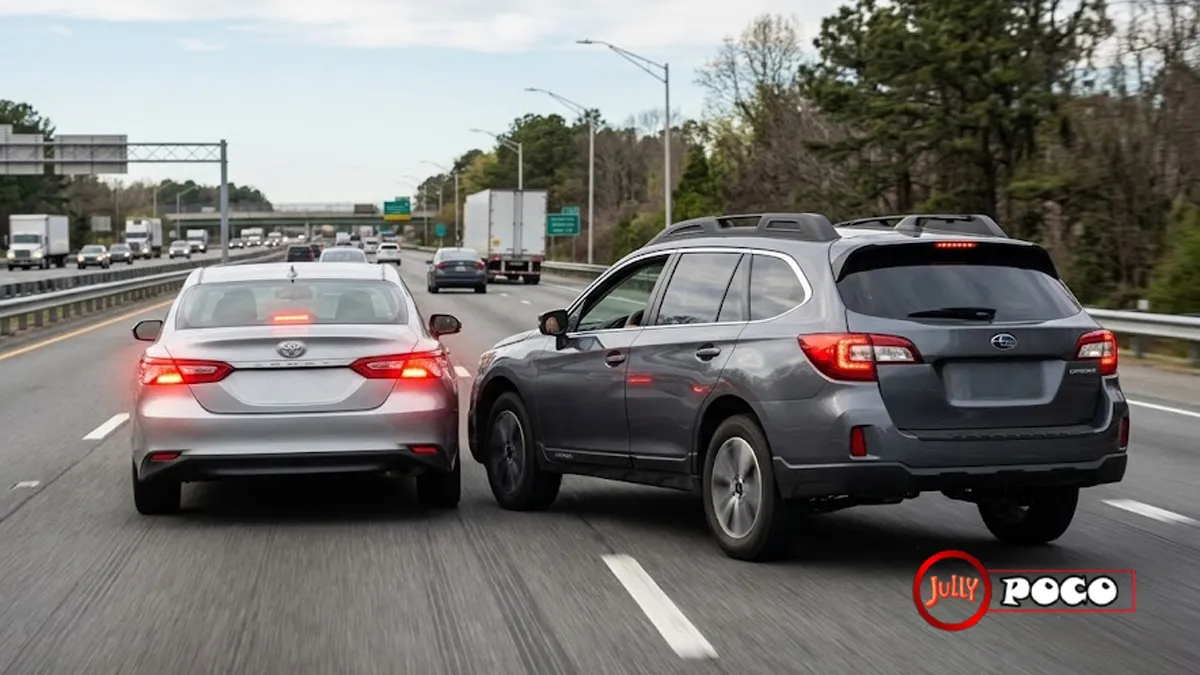
If you have ever wondered, “is brake checking illegal,” the short answer is yes in practice, and often very costly in court and with insurance. I have reviewed enough traffic safety cases and claim disputes to notice the same pattern: one driver gets angry, taps or slams the brakes to “teach a lesson,” and a simple commute turns into a crash, a police report, and sometimes a lawsuit.
Brake checking is not just rude. It can be treated as aggressive driving and road rage. In many states, officers do not need a law labeled “brake checking” to cite it. They use broader traffic rules such as reckless driving, unsafe speed changes, or endangering other motorists. That matters because rear-end collision liability is not always as simple as “the back driver is automatically at fault.”
In this guide, I will break down what brake checking is, who may be liable, what penalties can apply, whether insurance pays, and what I would do immediately after a crash. I will also point you to related safety topics like Why Is My Steering Wheel Shaking When I Brake, Car Airbags, and What does it mean when engine light is blinking when vehicle issues overlap with accident risk.
1. What Is Brake Checking and Why Is It Illegal?
Brake checking happens when a lead driver suddenly hits the brakes without a legitimate reason, usually to scare, punish, or control the driver behind them. It often grows out of tailgating and following too closely, lane disputes, or road rage.
A real emergency is different. If a child runs into the road, traffic stops ahead, or debris appears, braking hard may be necessary. The problem starts when the braking is intentional and not tied to a real hazard.
In my experience, that distinction is where many claims are won or lost. Investigators look at context:
- Was traffic flowing normally?
- Was there any obstacle ahead?
- Did the lead driver appear angry or retaliatory?
- Did video show swerving, hand gestures, or repeated harassment?
So, is brake checking illegal? Usually yes, because it can violate reckless driving or aggressive driving laws even if the words “brake checking” never appear in the statute. The legal theory is simple: a driver may not intentionally create a crash risk.
Most traffic safety experts and insurers agree on this point. Deliberately causing sudden braking without cause is unsafe and can trigger both traffic penalties and civil liability.
2. Legal Consequences: Fines, Reckless Driving, and Points
When people ask me “is brake checking illegal,” they are often really asking what can happen if someone does it. The answer depends on the state, the severity of the incident, and whether anyone was hurt.
Here are the most common consequences.
| Possible Consequence | What It Can Mean | Why It Matters |
|---|---|---|
| Traffic citation | Ticket for reckless or aggressive driving | Immediate fines and court dates |
| License points | Demerit points added to record | Higher insurance and suspension risk |
| Misdemeanor charge | In serious cases, criminal charge | Possible probation, classes, or jail |
| Civil lawsuit | Injury or property damage claim | Out-of-pocket exposure and legal fees |
| Insurance problems | Premium hikes or cancellation | Long-term financial impact |
A few practical realities stand out:
- Fines can be steep, especially if the incident caused injury.
- Courts may order defensive driving or anger-management style programs.
- A reckless driving label can follow a driver long after the crash.
- If the conduct looks intentional, punitive damages may enter the conversation.
This is also where comparative negligence laws become important. Even if the lead driver brake checked, the rear driver may still share blame if they were speeding, texting, or following too closely.
I have seen people underestimate that second part. They focus only on the front driver’s misconduct and forget that juries and insurers often ask whether the rear driver left enough space to react.
3. Who Is at Fault in a Brake Checking Accident?
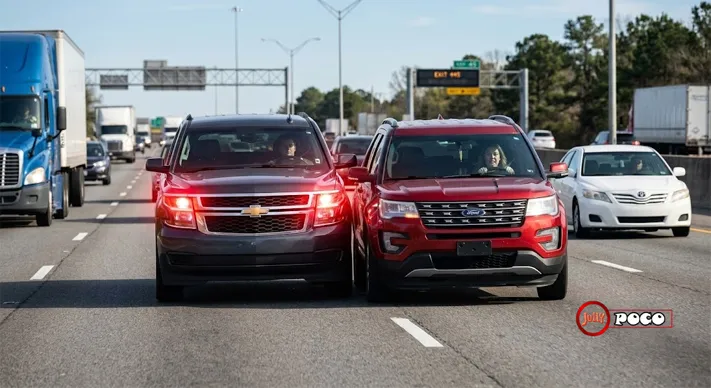
The usual rule in a rear-end crash is that the rear driver is presumed at fault. That presumption exists because drivers are expected to leave enough room to stop safely.
But who is at fault in a brake checking accident is more complicated. Intentional misconduct can weaken or even reverse that default assumption.
Rear-End Presumption vs. Intentional Misconduct
If the lead driver slammed the brakes for no valid reason, they may be partly or mostly responsible because they created the danger on purpose. Still, fault rarely becomes all-or-nothing.
A common split looks like this:
- Lead driver: blamed for intentional hazard creation
- Rear driver: blamed for tailgating and following too closely
- Insurance adjusters: assign percentages under comparative negligence laws
For example, I have seen a case summary where a rear driver had dashcam footage showing no traffic, no obstacle, and a lead driver who had just been gesturing angrily after a lane merge. That did not erase the rear driver’s duty to keep distance, but it made the brake-checking allegation credible and shifted the liability analysis.
This is why the question “Who is at fault in a brake checking accident” does not have a one-line answer. It depends on:
- Whether braking was justified
- The speed and distance between vehicles
- Weather and road conditions
- Witness statements
- Available video or Event Data Recorder (EDR) black box data
- Whether either driver was distracted or impaired
If you are dealing with injuries such as neck pain, a personal injury claim and whiplash issue can quickly become part of the case. And if the impact affects safety systems, articles like Car Airbags may help you understand how crash protection is supposed to work.
4. Does Insurance Cover Brake Check Accidents?
This is where things get messy. If you are asking, “Does insurance cover brake check accidents,” the honest answer is: sometimes, but not always in the way people expect.
Most auto policies are built to cover negligence. They are not designed to reward intentional harm. Many policies contain some version of an intentional act exclusion clause. That means if the insurer believes its own policyholder intentionally caused the collision, coverage may be limited or denied for that conduct.
That does not mean every brake-check claim is automatically uncovered. Insurers first investigate whether the event was truly intentional or simply poor driving. They look for:
- Dashcam video evidence
- Police findings
- Prior inconsistent statements
- Telematics or braking data
- Witness descriptions of aggressive driving and road rage
I have noticed that insurers become especially skeptical when facts suggest a staged crash. Brake checking has been linked in some cases to fraud schemes, especially where a driver forces a low-speed rear-end hit and then alleges serious injuries.
Useful context on Event Data Recorder (EDR) black box systems can help explain how braking events are reconstructed. And the aggressive driving and road rage guidance from NHTSA reinforces how seriously this behavior is viewed.
For medical fallout, whiplash is one of the most common injuries after a sudden stop. The whiplash overview from MedlinePlus is a solid consumer reference if symptoms appear after the crash.
So, does insurance cover brake check accidents? Sometimes yes for damages in dispute, but intentional conduct can trigger exclusions, higher premiums, or policy cancellation. That is one reason I tell people never to assume the standard rear-end claim process will be simple.
5. How to Prove Someone Brake Checked You
If you need to know how to prove someone brake checked you, start with this truth: evidence matters more than outrage. Saying “they did it on purpose” is not enough. You need proof strong enough to overcome the usual rear-end presumption.
The strongest evidence includes:
Dashcam Footage
This is often the best evidence. It can show steady traffic flow, no hazard ahead, and a sudden unnecessary brake application.
Eyewitness Testimony
Neutral third parties can be extremely persuasive. If another driver saw swerving, yelling, or repeated intimidation, that helps.
Police Report
Call law enforcement and make sure the scene is documented. Officers may note driver statements, road conditions, visible damage, and whether the story makes sense.
Event Data Recorder (EDR)
Modern vehicles often store braking, throttle, and speed data. That can help reconstruct timing and severity.
Photos and Scene Evidence
Take photos of traffic lanes, skid marks, vehicle positions, and anything that proves there was no reason for the sudden stop.
Admissions
Sometimes a driver says too much. I have seen cases where a lead driver blurted out, “He was riding me, so I hit the brakes.” That kind of statement can dramatically change the case.
If your vehicle also develops mechanical issues after the incident, practical guides like Why Is My Steering Wheel Shaking When I Brake may help you spot damage that should be documented for repairs and claims.
6. What to Do Immediately If You Are Brake Checked
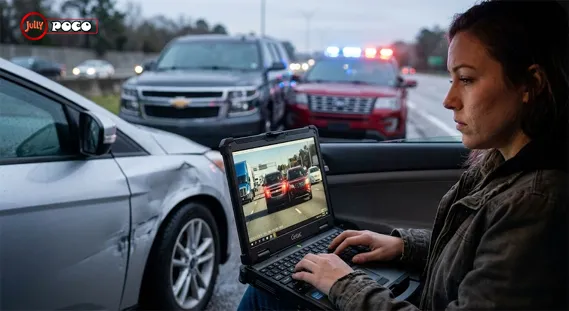
When emotions run high, the first few minutes matter. Here is the sequence I recommend.
1. Get Safe First
Move to a safe location if you can. Turn on hazard lights. If the other driver seems enraged, stay inside your vehicle unless safety requires otherwise.
2. Call 911 or Local Police
A formal report helps preserve facts. It also reduces the chance that the story changes later.
3. Do Not Argue
This is hard. I know. But roadside confrontations rarely help and can make things worse.
4. Capture Evidence Fast
Save dashcam files immediately. Take photos, record a short voice memo while details are fresh, and gather witness contacts.
5. Seek Medical Care
Even if you feel “mostly okay,” symptoms like whiplash, headaches, or back pain can appear later. Medical records connect the injury to the crash.
6. Notify Your Insurer Carefully
Stick to facts. Do not speculate. If fault is contested, a lawyer may need to step in before recorded statements get complicated.
7. Watch for Vehicle Warnings
After a sudden impact, warning lights can appear. If that happens, resources like What does it mean when engine light is blinking may help you understand why the car should not be ignored. And if you are comparing long-term ownership costs after replacing a vehicle, Electric car charging costs can be a useful next read.
FAQs
Is brake checking illegal even if no crash happens?
Yes, it can still be illegal. Police may cite it as reckless or aggressive driving even without contact if the behavior creates a danger.
Who is at fault in a brake checking accident?
It depends on the evidence. The front driver may be liable for intentional misconduct, but the rear driver may still share fault for following too closely.
Does insurance cover brake check accidents if the act was intentional?
Not always. An intentional act exclusion clause may allow an insurer to deny or limit coverage if the brake checking was deliberate.
How do I prove someone brake checked me?
Use dashcam video evidence, witness statements, police reports, and Event Data Recorder (EDR) black box data whenever available.
Can I file a personal injury claim after a brake-check crash?
Yes, especially if you suffered whiplash, back injuries, or other documented harm. Liability will depend on comparative negligence laws in your state.
Final Thoughts
So, is brake checking illegal? In real-world traffic enforcement and civil claims, yes, it is generally treated as unlawful and dangerous conduct. It can lead to tickets, lawsuits, insurance battles, and serious injuries. I have found that the biggest mistake people make is assuming every rear-end crash is automatically the rear driver’s fault. That is often true, but not always.
If you believe someone intentionally caused the stop, act quickly. Preserve evidence. Get medical care. Report the crash. Ask how to prove someone brake checked you before key details disappear. And if the case becomes a dispute over who is at fault in a brake checking accident, strong documentation can change everything.
For readers trying to stay safer on the road, I also recommend reviewing related vehicle safety topics such as Car Airbags, Why Is My Steering Wheel Shaking When I Brake, and Electric car charging costs as part of broader car ownership awareness.

Job Title: Founder, Chief Editor & Senior Technical SEO Specialist
Institutional Affiliation: Jullypoco Digital Properties
Specialties: Technical Search Engine Optimization | Content Strategy & Publishing | Web Architecture
Muhammad Ali is a seasoned digital content strategist, technical SEO professional, and the founder of Jullypoco. With deep expertise in website management, domain optimization, and search architecture, he orchestrates high-impact editorial frameworks designed to connect global audiences with reliable, high-value information. His commitment to search integrity and evidence-based optimization ensures the highest standards of data accuracy and site performance.
Verify Credentials & Connect:
🌐 Official Jullypoco Author Hub |
💼 LinkedIn Professional Profile |
👥 Facebook Profile