


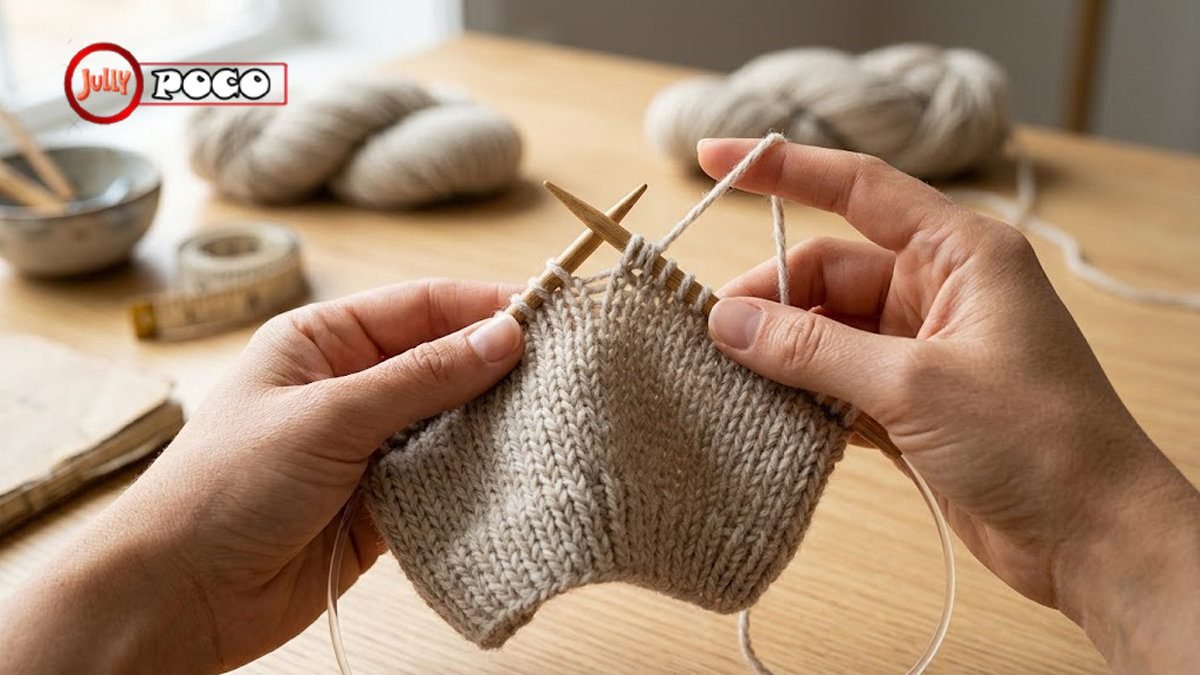
Short rows changed the way I knit. The first time I used German Short Rows, I was trying to shape a sweater neckline without leaving little holes at every turn. I had tried other methods before, but this one felt cleaner, faster, and much easier to remember. If you have ever struggled with gaps, messy turns, or confusing instructions, this guide will walk you through it in plain English.
In my experience, short rows can look intimidating in a pattern, but they are really just a way to create curves and shaping by turning your work before the row ends. That simple move opens the door to smoother sock heels and necklines, curved hems, shoulder shaping, and better-fitting garments. Once you understand the German Short Rows double stitch, the whole method starts to click.
If you enjoy practical skill-building like Working Session Habits or careful, step-by-step learning in topics as different as Dating in Germany, knitting German short rows fits the same pattern: small motions, repeated calmly, lead to confident results.
Why German Short Rows Matter
Before we get into the mechanics, it helps to know why so many knitters prefer this technique.
1. They create smooth shaping without obvious holes
Short row shaping adds three-dimensional structure to flat knitting. That matters when you want:
- raised sweater back necklines
- rounded shoulders
- curved shirt hems
- better-fitting bust shaping
- sock heels
Without a proper turning method, a gap often appears where you turned. German short rows solve that by creating a double stitch (DS) that closes the turning point neatly.
2. They are easier to remember than older methods
Many beginners compare German Short Rows vs. Wrap and Turn and quickly notice one key difference: German short rows are less fussy. You do not need to come back later and pick up a wrap from below. Instead, you make the turning point visible as a double stitch and then work it as one stitch later.
That simplicity is the reason I now teach this method first.
3. They blend beautifully into stockinette
In stockinette stitch, uneven tension is easy to spot. Some short-row methods leave bumps or loose loops. German short rows usually disappear into the fabric, especially when your tension control is steady.
What Is the Double Stitch in German Short Rows?
The heart of the method is the German Short Rows double stitch.
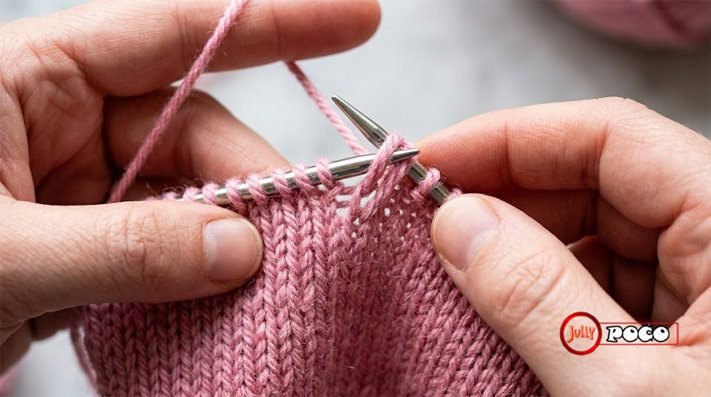
When you turn your work mid-row, the stitch at the turning point is manipulated so it looks like two legs sitting on the needle instead of one. This is not actually two separate stitches. It is one stitch being pulled into a shape that helps close the gap.
Here is what happens:
- You turn your work.
- You slip the next stitch purlwise.
- You pull the working yarn firmly up and over the needle.
- The slipped stitch tightens and stretches.
- Both legs of that stitch sit on the needle like a pair.
Later, when you come back to it, you knit or purl both legs together as if they were one stitch.
That is the entire trick. Simple. Elegant. Effective.
How to Knit German Short Rows Step-by-Step
If you are wondering How to knit German Short Rows step-by-step, this is the section to bookmark.
1. Work to the turning point
Follow your pattern until it tells you to turn. This can happen on the knit side or the purl side.
Example:
“Knit 20, turn.”
That means you knit 20 stitches and stop there. Do not go to the end of the row.
2. Turn your work
Flip the fabric so the opposite side faces you, just as if you had reached the end of a normal row.
This is where new knitters often pause. That is normal. Turning early feels odd at first.
3. Bring the yarn to the front
Place the yarn in front of your work, between you and the needles.
This setup matters. It creates the right angle for the double stitch.
4. Slip the next stitch purlwise
Insert the right needle into the next stitch as if to purl, then slip it from the left needle to the right needle without working it.
5. Pull the yarn up and over
Now pull the yarn firmly up and over the top of the right needle toward the back.
This is the defining motion. As you pull, the slipped stitch stretches so both legs are visible on the needle. That is your double stitch.
In my experience, beginners often under-pull here. If the stitch does not clearly look doubled, give the yarn a firmer tug. Snug, not violent.
6. Continue the row in pattern
What you do next depends on the side you are on:
- If the next stitch is a purl stitch, bring the yarn back to the front and purl on.
- If the next stitch is a knit stitch, keep the yarn in back and knit on.
The first stitch after the turn should feel secure. That helps with neat tension control.
7. Work back to the double stitch later
At some point, your pattern will bring you back to that turning point.
When you reach the double stitch:
- On a knit side, knit both legs together as one stitch.
- On a purl side, purl both legs together as one stitch.
That resolves the turn and closes the gap.
A Quick Walkthrough Example
Let’s say you are shaping the back neck of a sweater.
Pattern example:
- Knit 30, turn.
- Make double stitch, purl 10, turn.
- Make double stitch, knit 20, turn.
- Make double stitch, purl 30.
As you repeat these turns, you are building extra rows in the center or one section of the garment. That added fabric creates shape. I have used this on sweaters, shawls, and baby garments, and the result is almost always smoother than I expect.
German Short Rows vs. Wrap and Turn
This is one of the most common comparisons, and for good reason. If you have seen older patterns, you have likely come across wrap and turn (W&T).
Here is a practical comparison.
| Feature | German Short Rows | Wrap and Turn (W&T) |
|---|---|---|
| Main technique | Pulls stitch into a double stitch | Wraps yarn around a neighboring stitch |
| Ease for beginners | Easier to memorize | Slightly more fiddly |
| Appearance | Very clean in stockinette | Can leave visible bumps |
| Finishing step | Work both legs together as one | Pick up wrap and work it with stitch |
| Speed | Fast once learned | A bit slower |
| Best use | Sweaters, socks, shawls | Traditional patterns, many classic designs |
When discussing German Short Rows vs. Wrap and Turn, I usually say this: both methods work, but German short rows are easier for many modern knitters because the fixing step is more intuitive.
How to convert Wrap and Turn patterns
There is one small adjustment.
In wrap and turn, the wrap is usually placed on the stitch after the turning point. In German short rows, the turn happens on the stitch itself. So if you are substituting methods, you often work one stitch past the written W&T point before turning.
That tiny shift matters. It keeps shaping aligned.
For a trusted technical reference on short-row knitting, the Interweave resource library is often useful for knitters comparing shaping methods.
Common Mistakes and How I Fix Them
Even easy techniques have a learning curve. These are the issues I see most often.
1. The double stitch does not look doubled
Cause:
You did not pull the yarn firmly enough.
Fix:
After slipping the stitch, tug the yarn more decisively over the needle. The stitch should visibly climb up and split into two legs.
2. Holes still appear at the turn
Cause:
Usually loose tension before or after the turn.
Fix:
Pay attention to the first stitch after making the DS. A snug, even stitch there helps close the gap. Better tension control makes a huge difference.
3. I forget to treat the DS as one stitch later
Cause:
The doubled legs can look like two stitches.
Fix:
Pause when you reach a turn marker area. Count carefully. If you accidentally knit the legs separately, your stitch count will drift.
4. The fabric looks tight at the turn
Cause:
You may be pulling too aggressively.
Fix:
The yarn should be firm enough to form the DS, not so tight that it puckers the fabric. Think “secure” rather than “strained.”
Working German Short Rows in the Round
Many knitters ask about German Short Rows in the round, especially for top-down sweaters and socks. The good news is the method stays almost the same.
Even though your project is knitted in the round, short rows temporarily make you work back and forth.
Where you might use them in the round
- sweater back necklines
- sock heels
- bust shaping in circular garments
How it works
- Knit in the round until the pattern begins short rows.
- Turn and work back the opposite way.
- Make each double stitch exactly as you would in flat knitting.
- Continue back and forth until the shaping is complete.
- Resume knitting in the round.
The main point to watch is the final rejoining area. That last purl-side double stitch can sometimes create a tiny gap if worked carelessly. I usually slow down there and make sure both legs are worked cleanly together from the knit side.
For clear demonstrations of sock construction and short-row shaping, Tin Can Knits has approachable educational content many beginners find helpful.
Best Projects for Practicing German Short Rows
If you are brand new, do not start with your most expensive yarn.
I recommend practicing on:
- a small stockinette swatch
- a baby hat with neckline shaping
- a simple top-down sweater yoke
- basic socks
A plain swatch is the fastest teacher. Work ten stitches, turn, make a DS, work back, and repeat. Within fifteen minutes, most knitters start recognizing the rhythm.
This reminds me a bit of building Working Session Habits. Repetition creates comfort. Familiar motions turn confusion into muscle memory.
Practical Tips From My Knitting Table
These are the habits that helped me most.
Use markers near turning zones
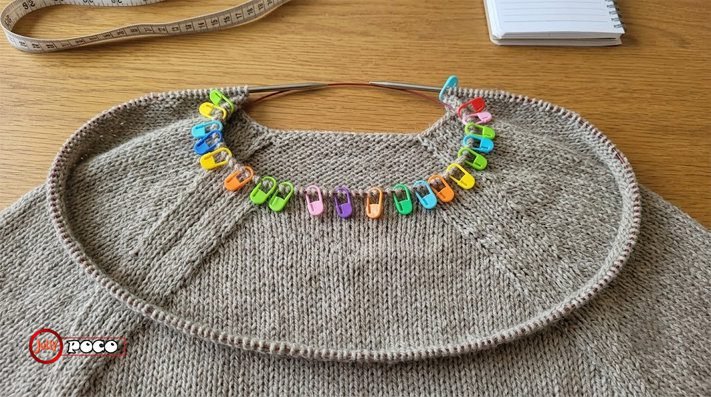
A marker will not sit on the exact turning point in every pattern, but it can remind you that short row shaping is coming soon.
Count stitches slowly
Especially when resolving the DS. A double stitch can trick your eye.
Practice on light-colored yarn
Dark yarn hides the stitch structure. For your first attempts, use a smooth, light wool or wool blend.
Learn the fabric, not just the steps
I noticed my knitting improved faster when I stopped treating short rows like magic and started reading the fabric. If a stitch looks doubled, it is probably your DS. If a gap appears, tension is the first thing I check.
Use trusted pattern sources
Reliable knitting publishers help. The Purl Soho tutorials and patterns are often clear, especially for knitters who prefer visual explanations.
FAQs About German Short Rows
Are German short rows good for beginners?
Yes. In my experience, they are one of the easiest short-row methods to learn because the turning point is visible and the finishing step is simple.
What is a German Short Rows double stitch?
It is a turned stitch created by slipping one stitch and pulling the yarn over the needle so the stitch appears to have two legs. Later, both legs are worked together as one.
How are German Short Rows different from wrap and turn?
In German Short Rows vs. Wrap and Turn, the biggest difference is structure. German short rows create a double stitch, while W&T wraps yarn around a stitch and requires that wrap to be picked up later.
Can I use German short rows for sock heels and necklines?
Absolutely. They are excellent for sock heels and necklines, as well as shoulder shaping, curved hems, and sweater yokes.
Do German short rows work in ribbing or only in stockinette?
They work in many stitch patterns, including ribbing. That said, they are easiest to learn and least visible in stockinette stitch.
Why do I still get holes?
Most of the time, it comes down to tension control. Check that you are pulling the working yarn firmly enough to form the DS, then keeping the next stitch snug.
Final Thoughts
If you have been hesitant to try German Short Rows, I hope this guide makes them feel much more approachable. They are one of those knitting skills that sound technical but become natural surprisingly fast. Once I learned them, I started using them everywhere: sweater necklines, shoulder shaping, curved hems, and socks. The clean finish won me over.
Start with a swatch. Practice the double stitch (DS) a few times. Then try it in a real project. That is the fastest path from “I think I understand this” to “I can do this without thinking.”
And if you like building confidence through small, repeatable systems, whether in knitting or topics like Dating in Germany or Working Session Habits, this method fits right in. Calm steps. Clear logic. Better results.
References
- Interweave — knitting technique resources: https://www.interweave.com/
- Tin Can Knits — educational knitting tutorials: https://tincanknits.com/
- Purl Soho — knitting tutorials and patterns: https://www.purlsoho.com/
