


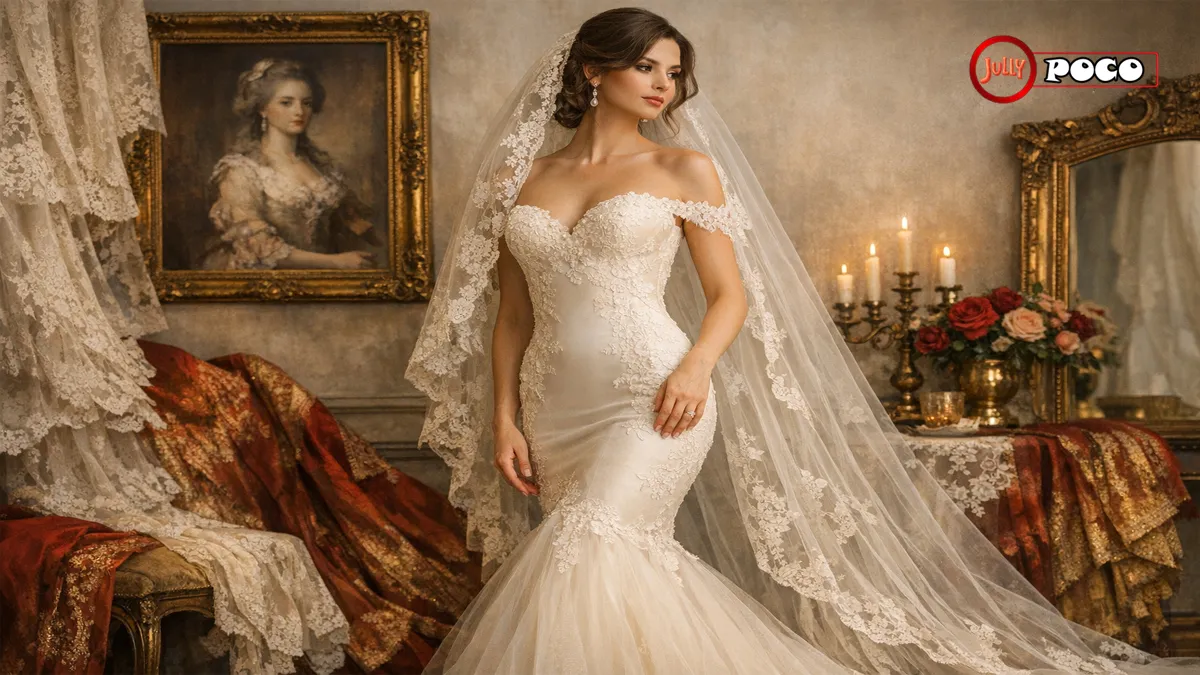
A mermaid wedding dress feels timeless and dramatic at once. It follows the body’s shape, then opens near the knees like a wave meeting the shore. For many brides, that silhouette captures romance, confidence, and elegance in one look. Yet its appeal becomes even richer when you understand the wider story of bridal fashion. Behind every fitted gown lies a long history of culture, symbolism, status, and changing ideals of beauty. 👰✨
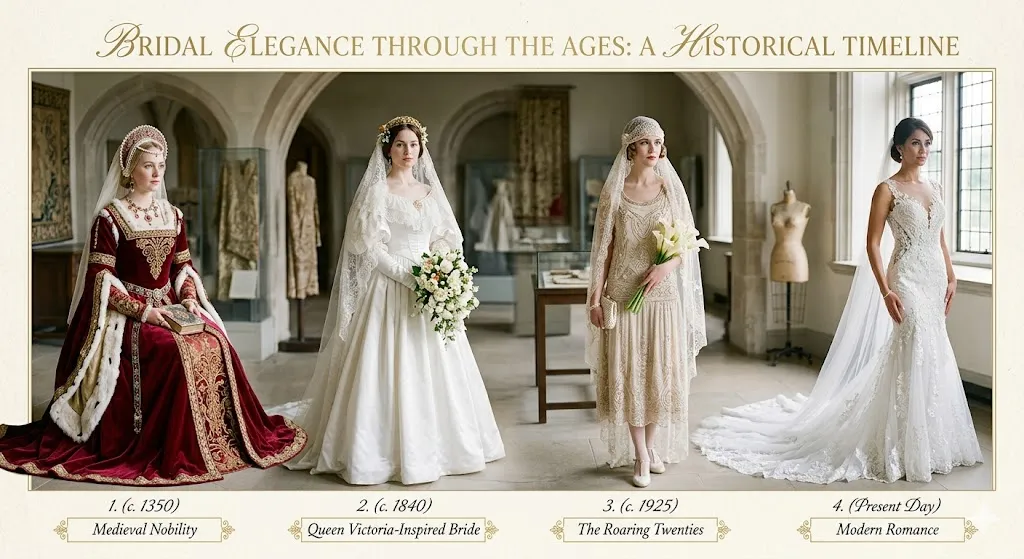
Wedding dresses have never been just dresses. They have reflected family ambition, religious meaning, national tradition, and personal identity. In Western history, white became iconic after Queen Victoria’s 1840 wedding. In many Eastern traditions, red remained the bridal color of joy, luck, and prosperity. Across centuries, brides wore silk, velvet, brocade, lace, fur, and later satin, tulle, and crystal-studded fabrics. Today, even a modern mermaid wedding dress carries traces of that long journey.
This article explores seven history facts brides continue to love, especially those drawn to fitted bridal silhouettes. If you are choosing a gown, researching bridal style, or simply adore fashion history, these stories reveal how deeply meaningful wedding attire can be. 💍
1. Wedding Dresses Began as Symbols of Wealth, Not Romance
Long before bridal magazines and designer salons, wedding clothing served a public purpose. In medieval and Renaissance Europe, marriage often united families, land, and influence. A bride’s outfit was not only about beauty. It announced status.
Rich families selected expensive fabrics such as:
- Silk
- Velvet
- Brocade
- Fur trim
- Hand embroidery
- Jewel embellishments
The goal was simple. A bride needed to look like living proof of her family’s resources. Color mattered less than luxury. In fact, most brides wore their best dress, whatever the shade happened to be.
This historical detail matters because it explains why bridal fashion developed such strong visual drama. The fitted bodices, structured seams, rich textures, and elaborate skirts we admire today come from centuries of dressing for significance. A modern mermaid wedding dress continues that tradition in a new form. Its sculpted silhouette still communicates intention, confidence, and celebration.
A real-life example helps here. In aristocratic Europe, noble brides often wore dresses that could be reused at formal court events. The wedding gown was an investment, not a one-day purchase. That practical reality shaped bridal style for generations.
If you enjoy tracing how historical fashion evolved into bridalwear, the wedding dress record offers a useful starting point for global context.
Why brides still adore this fact
Brides often feel pressure to choose a gown that is “perfect.” History offers reassurance. Bridal style has always carried emotion and social meaning. It was never only about trend. When a bride chooses a silhouette that feels strong and authentic, she is participating in a very old tradition.
2. White Was Not Always the Default Bridal Color
Many brides assume white has always defined the Western wedding gown. It has not. White existed in royal and noble circles before the 19th century, but it was not the universal standard.
A few striking examples stand out:
- Philippa of England wore a royal white gown in 1406.
- Mary, Queen of Scots wore white in 1559.
- In France at the time, white could symbolize mourning.
These examples show that color symbolism has never been fixed. Meanings changed across regions and centuries. Blue was also associated with purity and fidelity in earlier European tradition. Other brides chose silver, rich reds, gold tones, or floral fabrics.
Then came the turning point: Queen Victoria’s marriage to Prince Albert in 1840. Her white satin gown, trimmed with Honiton lace, became a cultural milestone. It was widely reported, copied, and admired. Over time, it shifted white from one bridal choice to the bridal choice in much of the Western world.
That shift still shapes bridal shopping today. Even brides who choose ivory, eggshell, or ecru are working within the legacy Victoria popularized.
White shades brides love now
Today’s brides often choose softer versions of white because they flatter more skin tones and photograph beautifully. Popular shades include:
- Ivory
- Ecru
- Eggshell
- Soft champagne-white blends
A fitted silhouette, including a mermaid wedding dress, often looks especially refined in these shades because the structure and seams show clearly without feeling harsh.
3. The Mermaid Silhouette Reflects Modern Bridal Confidence
The mermaid silhouette is not medieval, but its roots connect to the history of body-conscious fashion. As women’s formalwear evolved through the 19th and 20th centuries, tailoring became more precise. Designers experimented with shape, fit, and movement. By the 20th century, bridal gowns began following mainstream fashion more closely.
That meant changing hemlines, waistlines, sleeves, and proportions. In the 1920s, some dresses featured shorter fronts with longer trains. In the 1960s, Victorian-inspired romance returned. In the early 2000s, strapless gowns surged in popularity. These shifts opened the door for the dramatic, figure-defining gown many brides now love.
The mermaid wedding dress became popular because it speaks to a modern bridal mindset. It honors tradition, yet it also celebrates individuality. It is elegant without disappearing into convention. Think of it as the bridal version of a poised entrance: calm, graceful, and impossible to ignore. 🌊
Why the silhouette resonates emotionally
Many brides choose this shape because it offers:
- A defined waist
- A dramatic train effect
- A balance of glamour and sophistication
- A red-carpet feel without losing bridal romance
It also suits many design directions. A mermaid gown can look classic in satin, soft in crepe, regal in lace, or ethereal in tulle.
For brides researching the broader timeline of white wedding dresses, historical sources show how strongly Western bridal norms grew from royal influence and later media culture.
Short practical example
A bride planning a formal evening wedding may choose a fitted crepe mermaid gown with a long veil. The shape feels current, but the drama echoes centuries of ceremonial dressing.
4. Red Bridal Attire Has Been Just as Important as White
If Western bridal fashion tells the story of white, many Eastern traditions tell the story of red. This contrast is one of the most fascinating facts in wedding history.
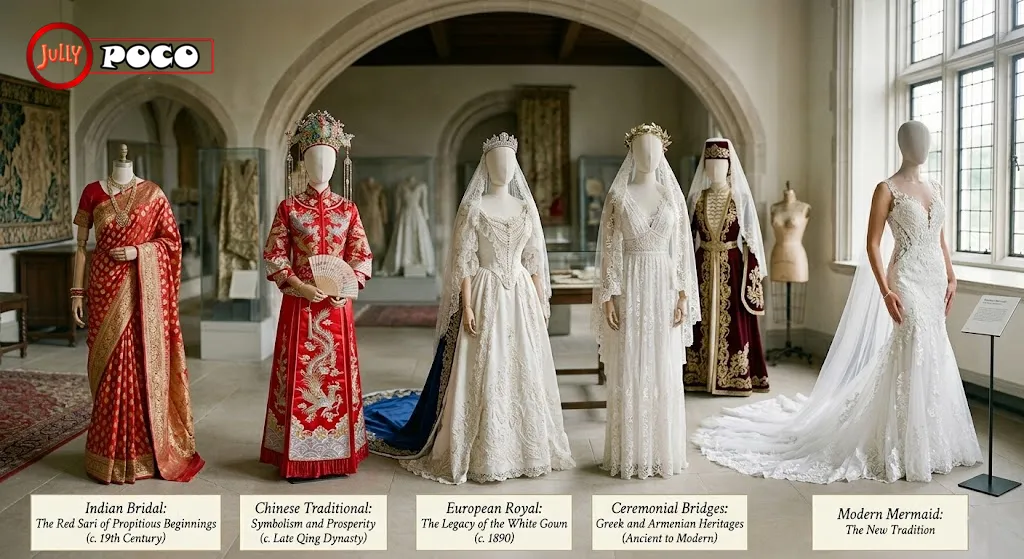
In India, brides have long worn red saris, often woven with gold brocade. Red symbolizes auspiciousness, joy, fertility, and prosperity. It is not simply decorative. It carries blessing and cultural memory.
In Kurdish tradition, first-time brides wore red, while remarried brides wore pink. Across Asia and the Middle East, bridal attire has varied widely in cut, fabric, and ceremony-specific meaning. Silk has remained especially important in many regions because of its beauty and symbolic value.
Chinese bridal traditions also include richly symbolic garments, such as forms of hanfu wedding dress, which connect ceremony to heritage and historical identity.
What this teaches modern brides
It reminds us that no single bridal color owns the meaning of love or commitment. White may suggest purity in one tradition. Red may symbolize joy and blessing in another. Both are meaningful. Both are beautiful.
This is especially helpful for multicultural couples. Many brides now include more than one look:
- A white ceremony gown
- A red reception outfit
- A heritage garment for family rituals
- A modern bridal silhouette inspired by both traditions
Some even choose a mermaid wedding dress for the ceremony, then change into traditional attire later. This blend respects family heritage while allowing personal style.
Bridal color symbolism at a glance
| Culture/Region | Common Bridal Color | Traditional Meaning | Typical Fabrics/Details |
|---|---|---|---|
| Western Europe & North America | White, ivory, eggshell | Purity, celebration, formality | Satin, lace, tulle, silk |
| India | Red | Auspiciousness, prosperity, joy | Silk, gold brocade, embroidery |
| Kurdish traditions | Red or pink | Marital status symbolism | Rich textiles, layered garments |
| China | Red, historical traditional dress forms | Luck, happiness, prosperity | Silk, embroidered motifs |
| LDS temple tradition | White | Purity, equality before God, reverence | Modest cuts, simple elegant fabric |
Tables like this help clarify an important truth. Bridal fashion is global, not singular.
5. Religion and Ritual Shaped Bridal Design More Than Trends Did
Fashion trends matter, but ritual often matters more. Many wedding garments developed around expectations of modesty, sacred symbolism, and ceremonial respect.
For example, in the LDS Church, brides wear modest white dresses that symbolize purity and equality before God. In many Christian traditions, veils, sleeves, and long trains developed ceremonial meanings over time. In other faiths and cultures, head coverings, textile colors, embroidery, and jewelry carry spiritual weight.
That means a bride’s dress may express several things at once:
- Personal taste
- Family values
- Religious devotion
- Community belonging
- Historical continuity
This perspective helps explain why wedding attire can feel emotional in ways ordinary fashion does not. A bridal gown is not just chosen. It is interpreted by everyone present.
A human example
A bride may love a strapless fitted gown but choose to add detachable sleeves for a religious ceremony. That decision is not a compromise in the negative sense. It is a thoughtful blend of identity, reverence, and style.
This is one reason the mermaid wedding dress has remained popular. It adapts well. Designers can make it modest or bold, ornate or minimal, traditional or modern. The underlying silhouette stays elegant while details shift to meet cultural or religious needs.
6. Wedding Dress History Is Also a Story of Art and Memory
Much of what we know about bridal attire comes from paintings, portraits, and preserved garments. These visual records show not only what brides wore, but what societies valued.
Some often-cited historical highlights include:
- A 14th-century Bologna painting showing early ceremonial dress
- Peter Paul Rubens’ 1630 portrait of Helena Fourment
- Sophia Magdalena of Denmark’s gown from 1766
- Folk and regional garments from Finland, Armenia, Greece, Yemen, Kazakhstan, and beyond
These records matter because wedding fashion is often more fragile than other clothing history. Gowns were altered, reused, stored poorly, or passed down without documentation. Portraits and visual archives preserve details fabric alone may not.
Global bridal diversity is stunning
Across the world, wedding attire has included:
- Finnish farmer bridal dress
- Armenian ceremonial garments
- Greek wedding clothing
- Yemeni bridal jewelry ensembles
- Sikh wedding attire
- Nepali and Bengali bridal dress
- Sri Lankan, Cambodian, Vietnamese, Thai, and Burmese styles
- Balinese ceremonial wedding garments
Each tradition tells a story about climate, craft, religion, economics, and beauty ideals. This wider view can be comforting for brides who feel torn between tradition and trend. Bridalwear has always evolved. It has always been local, personal, and symbolic.
Why this matters to modern dress shopping
When brides see history as a living archive, they often shop more confidently. Instead of chasing one perfect trend, they begin asking better questions:
- What story do I want my dress to tell?
- Which traditions matter most to me?
- Do I want softness, drama, simplicity, or ceremony?
- Which silhouette reflects how I want to feel?
For many, the answer still leads back to a mermaid wedding dress because it blends visual drama with graceful structure.
7. Today’s Bridal Fashion Blends Heritage With Innovation
Modern bridal style is both deeply historical and highly inventive. Designers now create gowns for brides who want flexibility, comfort, symbolism, and visual impact at once.
Recent trends in 2024 include:
- Drop-waist silhouettes
- Convertible gowns
- Crystal embellishments
- Vintage-inspired tulle
- Minimalist fabric-forward designs
- Structured corsetry with softer drape
This does not mean tradition has disappeared. Instead, tradition has become more adaptable. A bride can honor heritage through embroidery, jewelry, fabric, veil style, or color while still choosing a modern cut.
The modern mermaid wedding dress fits beautifully into this moment. It can be designed with:
- Detachable overskirts
- Long lace sleeves
- Illusion necklines
- Clean satin panels
- Beaded bodices
- Cathedral trains
- Minimal crepe construction
That versatility explains why brides keep returning to it. It feels current, but it never seems disconnected from bridal history.
What brides adore most now
Today’s brides often want three things at once:
- Emotional meaning
- Photographic beauty
- Comfortable self-expression
The best bridal fashion delivers all three. A gown should not feel like a costume. It should feel like the bride, only elevated.
Practical examples brides can use
- A bride with a classic church wedding may choose lace sleeves and a fitted silhouette.
- A beach bride may select a lighter crepe mermaid gown with minimal embellishment.
- A multicultural bride may wear a white gown for vows and a red embroidered look for the reception.
- A fashion-forward bride may choose a convertible fitted gown with a removable overskirt.
This blending of old and new is not confusion. It is the current chapter of bridal history.
How Brides Can Use These History Facts While Choosing a Dress
Understanding history can make shopping easier and less overwhelming. It gives context to the choices in front of you.
Here are a few simple ways to use that knowledge:
- If you love white: You are participating in a tradition strongly shaped by Queen Victoria’s influence.
- If you love red or gold: You are honoring a bridal language with deep roots across Eastern cultures.
- If you choose fitted tailoring: You are part of the long story of ceremonial dress as visual expression.
- If you want modest details: You are reflecting how ritual has shaped bridal design for centuries.
- If you mix styles: You are doing what brides have always done—adapting tradition to real life.
A dress becomes more meaningful when you understand its lineage. That is true whether you choose a ball gown, sheath, A-line, or mermaid wedding dress.
FAQs About Mermaid Wedding Dress History and Bridal Traditions
1. Why is the mermaid wedding dress so popular with modern brides?
It offers a sculpted, elegant shape with dramatic movement. Brides often love how it feels formal, romantic, and distinctive.
2. Did brides always wear white wedding dresses?
No. White became dominant in Western culture after Queen Victoria’s 1840 wedding. Before that, brides wore many colors.
3. What does red symbolize in bridal traditions?
In many Eastern cultures, red symbolizes prosperity, joy, luck, and auspicious beginnings.
4. Are ivory and eggshell considered traditional bridal colors?
Yes. These shades are modern variations of the white bridal tradition and are widely accepted in contemporary weddings.
5. Can a mermaid silhouette work for religious ceremonies?
Yes. Designers often adapt it with sleeves, higher necklines, overlays, or detachable features to meet modesty needs.
6. Is it acceptable to combine cultural bridal traditions?
Yes, many modern brides do. A ceremony gown and a second heritage-based outfit is a thoughtful and meaningful choice.
Conclusion
Bridal fashion is far more than fabric and trend. It is a record of love, status, faith, family, and cultural identity. From medieval displays of wealth to Queen Victoria’s lasting white-gown influence, from red saris in India to modern minimalist tailoring, the wedding dress has always reflected the world around it. That is why these history facts continue to captivate brides. They reveal that every gown belongs to a much larger story. 💖
A mermaid wedding dress is especially beloved because it captures that balance so well. It feels modern, but it also carries echoes of ceremonial elegance from earlier centuries. Whether you want something classic, modest, fashion-forward, or culturally blended, understanding bridal history helps you choose with clarity and confidence.
If you are exploring your bridal style, let these facts guide you gently. Look for a gown that respects your story, not just the trend cycle. The best wedding dress is the one that feels meaningful when you step into it.